معرفی
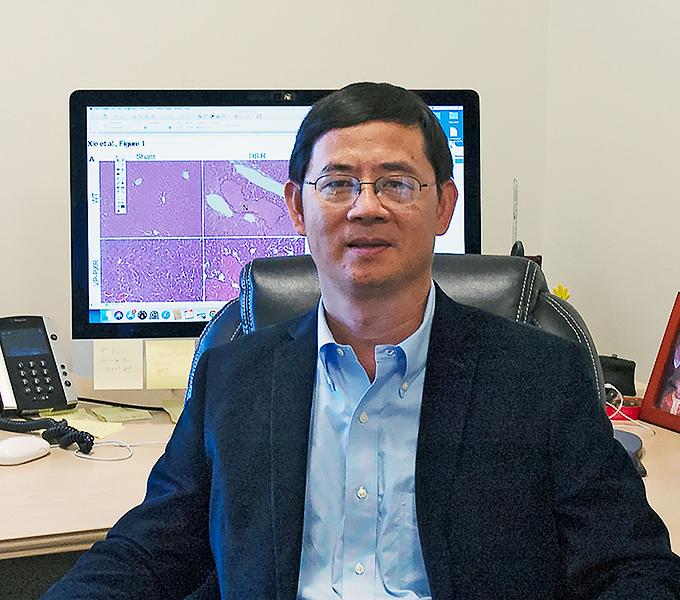
Dr. Hongbing Wang is a Professor in the Department of Pharmaceutical Sciences at the University of Maryland School of Pharmacy, where he leads a dynamic research laboratory focused on drug metabolism, xenobiotic receptors, and drug-induced liver injury. His work bridges molecular pharmacology, toxicology, and cancer therapeutics.
Research Interests: Dr. Wang’s research investigates the transcriptional regulation of drug-metabolizing enzymes and transporters by nuclear receptors such as CAR, PXR, and AhR. His lab explores how these receptors influence drug-drug interactions, hepatotoxicity, energy homeostasis, and cancer progression. Specific projects include the role of CAR in chemotherapy bioactivation, the function of SLC13A5 in liver metabolism, and the development of 3D human liver models for toxicity testing.
The recent publications highlight a strong trend toward translational pharmacology, with emphasis on improving chemotherapy safety and efficacy, understanding gut-liver interactions, and developing human-relevant in vitro models for drug safety assessment. The work integrates molecular biology, cellular models, and clinical insights.
Scientific Contributions:
- Over 150 peer-reviewed publications in high-impact journals including Nature Communications, Blood, and Molecular Pharmacology.
- Development of novel CAR activators (e.g., DL5055) to enhance chemotherapy.
- Pioneering studies on the tumor-suppressive role of human CAR in liver cancer.
- Leadership in microphysiological systems for DILI evaluation.
Advising and Grants: Dr. Wang has mentored numerous graduate students and postdoctoral scientists, many of whom hold prominent positions in academia and industry. His lab is supported by competitive grants from the NIH and FDA, particularly in the areas of drug metabolism, toxicity, and cancer pharmacology. He actively collaborates with researchers across disciplines to advance mechanistic understanding of drug responses.
Labs and Teams: The Wang Lab at the University of Maryland employs a multidisciplinary approach, utilizing primary human hepatocytes, transgenic animal models, and advanced 3D spheroid co-cultures. The team includes postdoctoral scientists, graduate students, and research associates, working collaboratively on projects related to nuclear receptor biology and drug safety.