معرفی
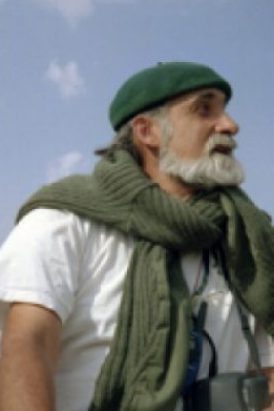
Henry T. Wright is Albert Clanton Spaulding Distinguished University Professor of Anthropology and Curator of Near Eastern Archaeology at the Museum of Anthropological Archaeology at the University of Michigan. He holds multiple affiliations including the Center for Middle Eastern & North African Studies, the African Studies Center, and the Santa Fe Institute for the study of complex systems.
His education includes a Ph.D. (1967) and M.A. (1965) from the University of Chicago, and a B.A. (1964) from the University of Michigan.
Wright's research focuses on early complex societies, with particular expertise in Mesopotamian civilization, Iranian archaeology (especially the Deh Luran Plain), and Madagascar archaeology. His work examines settlement patterns, state formation processes, urban development, and the ecological contexts of early civilizations. His approach integrates regional and ecological perspectives to understand the evolution of human societies from prehistoric villages to early states.
His publications reveal a consistent trajectory examining early urban systems and state formation across different regions and time periods, connecting theoretical frameworks between Mesopotamia, Iran, and Madagascar. His work demonstrates how comparative archaeology can illuminate universal patterns in the development of complex societies.
Awards and honors include:
- MacArthur Fellow
- Member, U.S. National Academy of Sciences
- Foreign Associate, Chinese Academy of Social Sciences
Wright has mentored numerous students, particularly Malagasy students during his extensive fieldwork in Madagascar. His research has been supported by various grants enabling long-term archaeological investigations in Iran, Madagascar, and Mesopotamia. He continues active research on Early Mesopotamia in Turkey and Syria.
His laboratory work involves collaboration with paleoecologists studying environmental changes associated with early civilizations, particularly in Madagascar's unusual ecosystems. His theoretical constructs developed in Madagascar provide insights into understanding the earliest civilizations in Mesopotamia and Mesoamerica.