معرفی
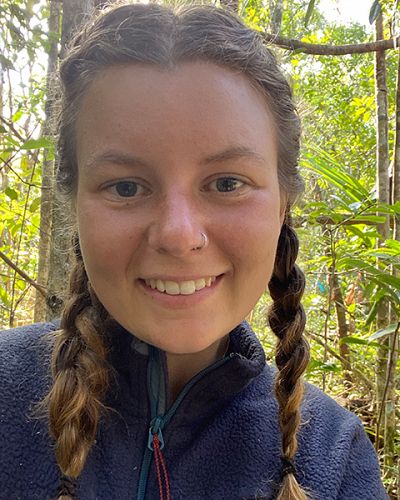
Anne Daphne Yoder is the Braxton Craven Distinguished Professor of Evolutionary Biology and Professor of Biology at Duke University. She also serves as Professor of Evolutionary Anthropology and Interim Chair of the Department of Evolutionary Anthropology. Yoder is Associate of the Duke Initiative for Science & Society, Faculty Network Member of the Duke Institute for Brain Sciences, and Faculty Research Scholar of DuPRI's Center for Population Health & Aging. Previously, she served as director of the Duke Lemur Center for 12 years, leading a remarkable renaissance of the research center.
Yoder earned her Ph.D. from Duke University in 1992. Her academic journey began with an undergraduate visit to the Duke Lemur Center as a UNC student in the 1980s, which profoundly influenced her scientific path.
Yoder's research integrates field inventory activities with molecular phylogenetic techniques and geospatial analysis to investigate Madagascar, an area of the world that is biologically complex, poorly understood, and urgently threatened. Her work focuses on phylogenetic and biogeographic analysis of Malagasy vertebrates to identify areas of high endemism and understand the role of geographic features in generating patterns of vertebrate diversity. She has launched Duke's SAVA Conservation project in northeastern Madagascar, which aims to protect lemur lives and habitat by improving human lives through education, fish farming, tree planting, and healthier cooking stoves. Her lab emphasizes capacity-building through the education and training of both American and Malagasy students.
Yoder's recent publications demonstrate trends across evolutionary biology, conservation science, genomics, and primate ecology. Her work spans from molecular studies of lemur genetics to large-scale conservation efforts in Madagascar. Key themes include speciation processes, microbiome research, hibernation physiology in primates, and the application of genomic tools to conservation challenges. Her interdisciplinary approach connects laboratory science with field conservation efforts.
- Member, National Academy of Sciences (2023)
- Elected Member, American Academy of Arts & Sciences (2021)
- Guggenheim Fellow (2018)
Yoder has mentored numerous American and Malagasy students through research opportunities enhanced by Malagasy/American partnerships. She has secured substantial grant funding, including NSFDEB-NERC grants for integrating computational, phenotypic, and population-genomic approaches to study cryptic speciation in Madagascar's mouse lemurs (2022-2026), and Doctoral Dissertation Research on the Evolutionary Pressures of Forest Fires and Dietary Niche on Wild Primates (2025-2027). Her leadership at the Duke Lemur Center doubled research activity and welcomed 32,000 visitors annually, with 285 new lemurs born during her tenure.
Yoder leads research teams focused on Madagascar's biodiversity, directing field operations in Madagascar and laboratory work at Duke. Her SAVA Conservation project represents a comprehensive approach to conservation that integrates ecological protection with human development initiatives. Her lab continues to expand genomic approaches to understanding primate evolution and conservation needs.