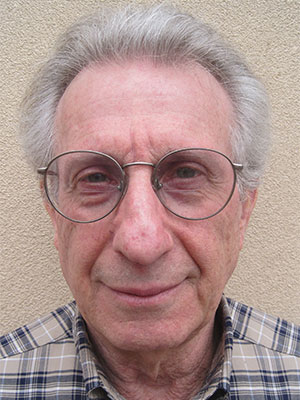
معرفی
Hendrik Dietz serves as Full Professor of Biophysics in the Physics Department at the Technical University of Munich (TUM), holding the Chair of Biomolecular Nanotechnology since 2018. He has been a continuous faculty member at TUM since 2009, progressing from Assistant Professor to Associate Professor before his current appointment, and leads the Laboratory for Biomolecular Design as Principal Investigator.
His academic credentials include:
- Doctorate in Physics (Dr. rer. nat.) from TUM (2007) with thesis on 'Mechanical Anisotropy of a Protein Structure in Single-Molecule Experiments'
- Diploma in Physics (Dipl.-Phys.) from Ludwig-Maximilians-Universität München (2004) with thesis on 'Mechanics of the Green Fluorescent Protein'
- Exchange studies at Universidad de Zaragoza, Spain (2000-2001)
- Initial diploma studies at University of Paderborn (1998-2000)
Dietz's pioneering research integrates biophysics and nanotechnology to engineer biomolecular structures, particularly through DNA-based self-assembly techniques. His work establishes foundational methods for creating programmable 3D nanostructures with applications in drug delivery, molecular diagnostics, and synthetic biology. The Laboratory for Biomolecular Design focuses on developing novel biomolecular tools that bridge fundamental biophysical principles with practical nanotechnological implementations.
His exceptional contributions are recognized through numerous elite awards:
- European Research Council Advanced Grant (2021)
- Honorary membership in Nordrhein-Westfalen Academy of Sciences (2019)
- ERC Consolidator Grant (2016) and Carl-von-Linde Senior Fellowship
- Gottfried Wilhelm Leibniz Prize (2015), Germany's highest research honor
- ERC Starting Grant (2010) alongside Arnold Sommerfeld Award
- Feodor Lynen Fellowship (2007-2008) and Deutscher Studienpreis (2008)
Dietz's sustained funding success—including multiple ERC grants spanning his career—enables ambitious interdisciplinary projects in biomolecular engineering. His laboratory maintains strong collaborations across physics, chemistry, and medical research domains to translate nanostructure designs into functional biomedical applications. The research program emphasizes both fundamental biophysical understanding and technological innovation in molecular design.
The Laboratory for Biomolecular Design operates as a dynamic research hub where physics-based approaches drive breakthroughs in programmable matter, with ongoing work expanding into synthetic biology applications and precision nanomedicine platforms.