معرفی
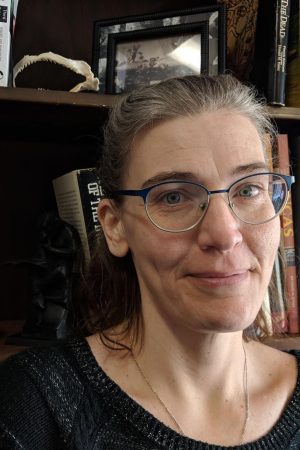
Heather Tamminen is a Lecturer in Biological Anthropology at Bournemouth University, Faculty of Science and Technology, within the Department of Archaeology, Anthropology, and Forensic Science. Her research and teaching focus on human evolution, osteology, and bioarchaeology, with a strong emphasis on trauma analysis and digital methods.
Her educational background includes an MSc in Human Osteology and Funerary Archaeology from the University of Sheffield and a BHK (Honours) in Human Kinetics from the University of Windsor. She completed her PhD at Bournemouth University in 2022 on the digital modeling of human remains using photogrammetry.
Her research interests span bioarchaeology, forensic anthropology, paleopathology, 3D modeling, and Viking Age studies. She specializes in analyzing skeletal trauma, particularly sharp-force injuries, and has pioneered work in applying photogrammetry to enhance trauma interpretation and digital preservation of skeletal collections.
Her recent publications demonstrate a consistent focus on methodological innovation in osteoarchaeology, particularly in sex estimation, trauma terminology, and digital reconstruction. These works reflect a strong interdisciplinary approach combining anatomy, archaeology, and digital technology.
- Patricia Phillips Prize (highest average, Department of Archaeology), University of Sheffield, 2016
She has served as a demonstrator for Human Functional Anatomy and Bodies of Evidence at Bournemouth University and is currently supervising research and teaching in biological anthropology. Her work has been supported by institutional and museum partnerships, including with Dorset County Museum. She is an active member of professional communities such as the British Association for Forensic Anthropology and the European Association of Archaeologists.
Heather is involved in outreach and public engagement, having delivered invited lectures at Dorset Museum and presented at major conferences including the European Association of Archaeologists and CAA-UK. Her research often involves collaborative teams and interdisciplinary methodologies, particularly in digital archaeology and forensic analysis.