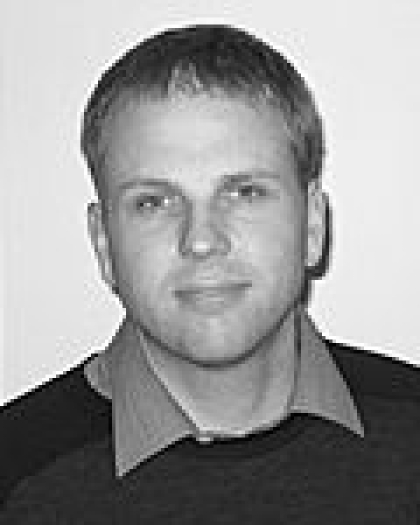
معرفی
Hans Julius Skaug is a Professor in the Department of Mathematics at the University of Bergen (UiB), Norway, with a distinguished career spanning several decades focused on statistical methodology and its applications to biological and ecological problems.
Dr. Skaug's research expertise encompasses several interconnected domains:
- Biostatistics, particularly applications of statistics and probability to marine ecology
- Computational statistics, with pioneering work on Automatic Differentiation and Laplace approximation for complex model fitting
- Artificial Intelligence, where he has recently focused on variational autoencoders and diffusion models
- Development of innovative methods for line transect surveys and close-kin mark recapture (CKMR)
His publication record shows a clear progression from foundational statistical methodology to increasingly sophisticated applications. The 2016 paper with Bravington and Anderson on 'Close-kin mark-recapture' in Statistical Science established him as a leader in population estimation methods. Recent publications (2023-2025) demonstrate continued innovation in refining CKMR techniques, applying TMB to diverse fields like insurance claims analysis, exploring sparse Bayesian learning, and addressing measurement errors in marine mammal surveys. His work consistently bridges theoretical statistical development with practical applications to real-world conservation and management problems.
Dr. Skaug served as co-Editor in chief of the Scandinavian Journal of Statistics from 2018 to 2021, demonstrating his significant standing in the international statistical community. He teaches STAT110 Basic course in statistics at UiB during both spring and fall semesters and has conducted specialized workshops on CKMR and TMB at institutions including Dalhousie University in Halifax and the Institute of Marine Research in Bergen.
He is actively involved in software development for statistical modeling through the TMB project (https://github.com/kaskr/adcomp) and ADMB (http://admb-project.org/), which implement his theoretical work on combining Automatic Differentiation with statistical modeling. His current research trajectory shows increasing integration of AI techniques with traditional statistical approaches, reflecting his observation that backpropagation in deep learning is fundamentally the same computational technique as Automatic Differentiation, which he has worked with for over 20 years.