Michael A Osborne is Professor of Machine Learning at the University of Oxford and leads the Bayesian Exploration Lab . He serves as Director of the EPSRC Centre for Doctoral Training in Autonomous Intelligent Machines and Systems and co-directs the Oxford Martin AI Governance Initiative. His research focuses on Bayesian optimization, Gaussian processes, and probabilistic numerics with applications in quantum devices, battery modeling, and AI governance. Key Positions: Professor of Machine Learning, University of Oxford Official Fellow, Exeter College Co-founder of Mind Foundry Lead Researcher, Oxford Martin Programme on Technology and Employment Research Themes: Probabilistic modeling for quantum systems Uncertainty quantification in energy storage AI safety and societal impact analysis Automated experimental design Quantum device calibration Probabilistic numerical methods Technical Contributions: Bridging reality gap in quantum devices Efficient Bayesian quadrature techniques Personalized neurostimulation algorithms Automated measurement protocols Quantum-classical hybrid ML
Professor Simo Särkkä holds a position in Sensor Informatics and Medical Technology at the Department of Electrical Engineering and Automation (EEA), Aalto University. His research focuses on multi-sensor data processing, Bayesian filtering, machine learning, and their applications in medical technology, brain imaging, and inverse problems. He leads research groups including the Helsinki Institute for Information Technology (HIIT) and Sensor Informatics and Medical Technology. His work bridges theoretical advancements in probabilistic methods with practical implementations in healthcare and engineering. Key research interests include Gaussian processes, stochastic differential equations, quantum machine learning, and signal processing. He has contributed to advancements in algorithms for nonlinear state-space models, parallel computing techniques, and medical imaging technologies such as scatter correction in CT scans. His methodologies are applied across domains like autonomous systems, robotics, and bioengineering. Notable publications span topics like quantum-assisted Gaussian regression, physics-informed machine learning for industrial processes, and parallel-in-time numerical methods. His work emphasizes computational efficiency and robustness in high-dimensional and real-time systems.
Colin Jones is an Associate Professor at the École Polytechnique Fédérale de Lausanne (EPFL) in the Automatic Control Laboratory, School of Engineering. He earned his BASc and MASc in Electrical Engineering and Mathematics from the University of British Columbia (1994-2002) and a PhD in Control Theory from the University of Cambridge (2002-2005). Prior to EPFL, he was an assistant professor there and a senior researcher at ETH Zürich. Current role: Director of the Robotics, Control, and Intelligent Systems Doctoral Program at EPFL Research focus: Optimization-based and model predictive control (MPC) for renewable energy systems, green energy management, and data-driven control methods His recent work (2023-2025) spans high-speed predictive control , smart grid optimization , and physically consistent neural networks , with applications to buildings, hovercrafts, and power systems. He has secured an ERC Starting Grant for his research on optimal control of building networks. Publications include over 200 papers in journals like Automatica , IEEE Transactions , and Energy and Buildings . Notable article trends include distributed optimization , data privacy in energy systems , and nonlinear MPC for autonomous vehicles . Scientific Awards : ERC Starting Grant for optimal control of building networks Advising : Supervises 10 current PhD students and has advised 19 past PhD students, including Alessandretti Andrea and Diwale Sanket Sanjay. Grants and projects emphasize smart energy systems , predictive demand response , and nonlinear control .
David Duvenaud is an Associate Professor at the University of Toronto , holding a Canada Research Chair in Generative Models and a Schwartz Reisman Chair in Technology and Society . He is cross-appointed to the Department of Computer Science and Department of Statistical Sciences . A Sloan Research Fellow and founding member of the Vector Institute , his work bridges deep probabilistic models , AI safety , and scientific computing . PhD in Machine Learning (University of Cambridge, 2014) Postdoc in Hyperparameter Optimization (Harvard University, 2016) Co-founded Invenia (energy forecasting company) His research spans foundational Neural Ordinary Differential Equations (NeurIPS 2018 Best Paper) and Automatic Chemical Design (ACS Central Science 2018) to recent work on AGI governance (2025) and AI safety (2024). Key contributions include stochastic variational inference , implicit differentiation frameworks , and antisymmetrization layers for quantum Monte Carlo. Recent publications (2024-2025) focus on systemic existential risks from AI , many-shot jailbreaking attacks , and epistemic uncertainty quantification . His group trains energy-based models with scalable MCMC samplers and develops invertible neural architectures (e.g., Residual Flows NeurIPS 2019). He also explores human-AI alignment through LLM Processes (NeurIPS 2024) and Sycophancy in Language Models (ICLR 2024). Canada Research Chair (2025) NSERC Grant (2025) Sloan Research Fellow (2021) Schwartz Reisman Chair (2021) Best Paper Award (NeurIPS 2018) Distinguished Paper Award (ICFP 2021) His students include James Requeima , Jesse Bettencourt , and Raymond Douglas . He teaches courses on Statistical Methods for Machine Learning and Differentiable Inference . Current work (2025) investigates systemic human disempowerment through incremental AI capabilities and sabotage risk mitigation via hyperparameter-aware evaluations.
Sam Staton is a Professor of Computer Science at the University of Oxford and Senior Research Fellow at Jesus College. He holds a Royal Society University Research Fellowship and leads the ERC-funded BLaSt project on probabilistic programming. His research focuses on programming language theory, particularly probabilistic and quantum programming, and category theory. Staton earned his PhD from the University of Cambridge in 2007, with prior roles as a lecturer and researcher at Cambridge, Paris, and Nijmegen. Research Interests: His work explores foundational aspects of programming languages, including semantics, algebraic effects, and applications to quantum computing and statistical modeling. Recent grants include the ARIA Safeguarded AI initiative and an AFOSR award. Education: PhD in Computer Science (2007), BA from Cambridge (2002). Students & Collaborators: Supervises multiple PhD students and postdocs, including those funded through his grants. Notable advisees include Swaraj Dash (now at Heriot-Watt) and Mathieu Huot (postdoc at MIT). Awards & Grants: Royal Society Fellowship, ERC Consolidator Grant (BLaSt), EATCS Best Paper Award, and Facebook Research Award. Labs & Teams: Leads the BLaSt project and collaborates on quantum programming via algebraic effects. Engaged in editorial roles for ACM Transactions on Quantum Computing and program committees for major conferences like POPL and LICS.
Prof. Dr. André Bardow is a Full Professor in Energy and Process Systems Engineering at ETH Zurich , leading research at the intersection of thermodynamics, machine learning, and sustainable energy systems. Previously, he held professorships at RWTH Aachen University (2010-2020) and TU Delft (2007-2010). He also served as part-time director at Forschungszentrum Jülich (2017-2022) and visiting professor at UC Santa Barbara (2015/16). His work focuses on energy systems optimization , computer-aided molecular design , and CO2 capture & utilization . PhD from RWTH Aachen University Current ETH Zurich affiliation Former roles at RWTH Aachen, TU Delft, Jülich Research Center His research integrates machine learning with thermodynamic modeling to optimize processes like crystallization and electrochemical cooling . Recent publications demonstrate advancements in solvent design, CO2 transport LCA, and ORC working fluid optimization. He chairs the VDI Technical Committee for Thermodynamics (2016-2024) and has received multiple awards including the Covestro Science Award and Arnold-Eucken-Award . Current projects address carbon circular economies , electrified chemical production , and AI-driven process optimization . His lab at ETH Zurich develops cutting-edge technologies like ML-CAMPD frameworks for sustainable separation processes and photoacid-based CO2 capture systems. Funding from the H2020 Systemic Expansion of Circular Ecosystems (grant 101036854) supports these initiatives. 2024 Clarivate Highly Cited Researcher 2022 Inaugural Lecture: "To sustainability and beyond: A computer-animated story on energy & chemicals" Recipient of multiple teaching and research excellence awards
Shinji Watanabe is an Associate Professor at Carnegie Mellon University's Language Technologies Institute and a Courtesy Professor in the Electrical and Computer Engineering department. He holds a Ph.D. (Dr. Eng.) from Waseda University, Japan, and has held research roles at NTT Communication Science Laboratories, Mitsubishi Electric Research Laboratories (MERL), and Johns Hopkins University. His research focuses on automatic speech recognition, speech enhancement, and machine learning for speech processing. Watanabe has published over 300 peer-reviewed papers and received the Best Paper Award at IEEE ASRU 2019. His work emphasizes robust speech processing in challenging environments, multilingual models, and neural audio codecs. He leads the ESPnet toolkit development for end-to-end speech processing systems and contributes to technical committees like IEEE SLTC and APSIPA SLA. Recent research trends include streaming speech systems, universal speech enhancement (URGENT challenges), and fusion of discrete speech units with self-supervised representations. He explores scalable speech foundation models through benchmarks like ML-SUPERB 2.0 and investigates cross-modal audio-visual processing in challenges like MISP 2025. Education : B.S., M.S., Ph.D. (Waseda University) Affiliations : CMU Language Technologies Institute, CMU ECE, Former roles at MERL and Johns Hopkins Key Projects : ESPnet, OpenWhisper-Style Models, URGENT Challenge Frameworks
Adam Finkelstein is a Professor in the Department of Computer Science at Princeton University, where he has been a faculty member since 1997. He holds a PhD and Master's in Computer Science from the University of Washington and a dual degree in Physics and Computer Science from Swarthmore College. Finkelstein is renowned for his interdisciplinary work at the intersection of computer graphics, audio processing, and machine learning, and he co-organized the Art of Science exhibition at Princeton. Education: PhD, Computer Science, University of Washington MS, Computer Science, University of Washington BA, Physics and Computer Science, Swarthmore College His research spans audio processing (e.g., speech enhancement, voice conversion, audio metrics), computer graphics (e.g., line drawing algorithms, stylized rendering, image manipulation), and machine learning (e.g., self-supervised learning, differentiable programming). His work often bridges technical and creative domains, exemplified by collaborations at Pixar and Adobe Creative Technologies Lab. Recent publications highlight advancements in audio super-resolution and voice conversion using deep learning frameworks, as well as stylized line rendering for animated 3D models. His contributions to perceptual audio metrics and shader optimization further underscore his impact on human-centric computational systems. Scientific Awards: NSF CAREER Award Alfred P. Sloan Fellowship Fellow of the Association for Computing Machinery (ACM) Finkelstein has secured foundational grants for his research and actively mentors students, though no specific advisees are listed. He also explores collaborative tools for internet music performance, reflecting his broader interest in distributed systems and user interfaces.
Xiaoming Hu is a Professor at the Division of Numerical Analysis, Optimization and Systems Theory within the Department of Mathematics at KTH Royal Institute of Technology (Kungliga Tekniska Högskolan) in Stockholm, Sweden. Born in Chengdu, China, he received his B.S. degree from University of Science and Technology of China in 1983, followed by M.S. and Ph.D. degrees from Arizona State University in 1986 and 1989 respectively. After serving as a research assistant at the Institute of Automation, Chinese Academy of Sciences (1983-1984), he was a Gustafsson Postdoctoral Fellow at KTH (1989-1990) before becoming a faculty member. His educational background includes: B.S. in Engineering, University of Science and Technology of China, 1983 M.S. in Engineering, Arizona State University, 1986 Ph.D. in Engineering, Arizona State University, 1989 Xiaoming Hu's research primarily focuses on multi-agent systems, nonlinear feedback stabilization, nonlinear observer design, and sensing and active perception. His work bridges theoretical control theory with practical applications in robotics and autonomous systems. He has made significant contributions to geometric control theory, mathematical systems theory, and nonlinear systems analysis and control. His research often involves developing theoretical frameworks for distributed control, formation control, and cooperative behavior in multi-robot systems. Professor Hu's publication record shows a consistent research trajectory with numerous high-impact publications in top-tier journals like Automatica, IEEE Transactions on Automatic Control, and Systems & Control Letters. His research has evolved from fundamental control theory to more applied problems in robotics and multi-agent systems, while maintaining strong mathematical foundations. Recent work shows increasing focus on safety-critical control, inverse problems in estimation, and networked systems. His scientific contributions include: Development of theoretical frameworks for multi-agent coordination and formation control Advances in nonlinear observer design for robotic systems Contributions to geometric control theory and systems theory Research on distributed estimation and control algorithms Applications of control theory to robotics and autonomous systems Professor Hu teaches several advanced courses including Mathematical Systems Theory, Geometric Control Theory, and Nonlinear Systems: Analysis and Control. He has supervised numerous degree projects at both undergraduate and graduate levels in mathematics, optimization, systems theory, and scientific computing. His teaching reflects his research expertise, providing students with both theoretical foundations and practical applications of control theory.
LEE Wee Sun is a Professor in the Department of Computer Science at the National University of Singapore (NUS), where he previously served as Head of Department, Vice Dean of Undergraduate Studies, and Vice Dean of Research. His academic journey began with a B.Eng. in Computer Systems Engineering from the University of Queensland (1992) and a Ph.D. from the Australian National University (1996), followed by research roles at the Australian Defence Force Academy and MIT. Education: Ph.D., Australian National University, Canberra, Australia (1996) B.Eng. in Computer Systems Engineering, University of Queensland, Brisbane, Australia (1992) Research Focus: Professor Lee pioneers work in Machine Learning , Planning Under Uncertainty , and Approximate Inference , with emphasis on integrating AI subfields for holistic reasoning. His current projects include "Learning to Decompose for Reasoning and Planning" (enhancing LLMs via self-supervised problem decomposition) and "Learning to Reason with Visual-Linguistic Inputs" (unifying vision, language, and reasoning in single architectures). Publication Trends: Recent work (2023-2025) centers on bridging LLMs with classical AI techniques, featuring breakthroughs in uncertainty quantification, multi-task optimization, and graph-based reasoning. Key themes include sparsity-aware vehicle routing, epistemic uncertainty for reliable LLMs, and differentiable neural solvers for combinatorial problems. Awards: IJCAI-JAIR Best Paper Prize (2022) RSS Test of Time Award (2021) RoboCup Best Paper Award (IROS 2015) HRATC 1st Place (2015) IPPC POMDP Track 1st Place (2011, 2014) UAI Google Best Student Paper (2014) Semeval-1 1st/2nd Place (2007) J.G. Crawford Prize (ANU 1996) Leadership & Service: As steering committee chair for ACML and area chair for NeurIPS/ICML/AAAI/IJCAI, Professor Lee shapes global AI discourse. His administrative roles at NUS and collaborations with MIT/Singapore-MIT Alliance demonstrate commitment to advancing AI education and research infrastructure. While student advisees aren't listed, his leadership positions imply extensive mentoring. Research Ecosystem: His work drives NUS's AI initiatives including Knowledge@Computing projects on reasoning frontiers. Current efforts focus on making AI systems robust through uncertainty-aware planning and multi-modal integration, with applications in robotics, verification systems, and combinatorial optimization.
André Bardow is a Full Professor at the Department of Mechanical and Process Engineering, ETH Zürich. His research focuses on energy systems optimization, life cycle assessment, computer-aided molecular design, and CO2 capture/utilization. Professor (ETH Zürich, 2020–present) Head of Institute of Technical Thermodynamics (RWTH Aachen University, 2010–2020) Visiting Professor (University of California, Santa Barbara, 2015/16) Part-time Director (Forschungszentrum Jülich, 2017–2022) Associate Professor (TU Delft, 2007–2010) Research Interests: His work spans energy and process systems engineering, with emphasis on sustainable technologies. Key areas include: Computer-aided molecular and process design Machine learning for chemical engineering Carbon capture and utilization (CCU) Life cycle assessment (LCA) of industrial processes Thermo-economic modeling of energy systems Multiphase equilibrium analysis Publication Trends: Recent articles focus on integrating machine learning with process design, optimizing CO2 capture in steel production, and advancing electrochemical cooling technologies. Subfields include sustainable plastics, ORC working fluids, and solvent mixture design. Scientific Awards: Fellow of the Royal Chemical Society Recent Innovative Contribution Award (EFCE, 2019) PSE Model-Based Innovation Prize (2018) Covestro Science Award (first recipient) Arnold-Eucken-Award (VDI-GVC) Highly Cited Researcher (Clarivate, 2024) Advising and Grants: Professor Bardow mentors students in process optimization and leads projects like Systemic expansion of territorial CIRCULAR Ecosystems for end-of-life FOAM (Grant 101036854, EC).
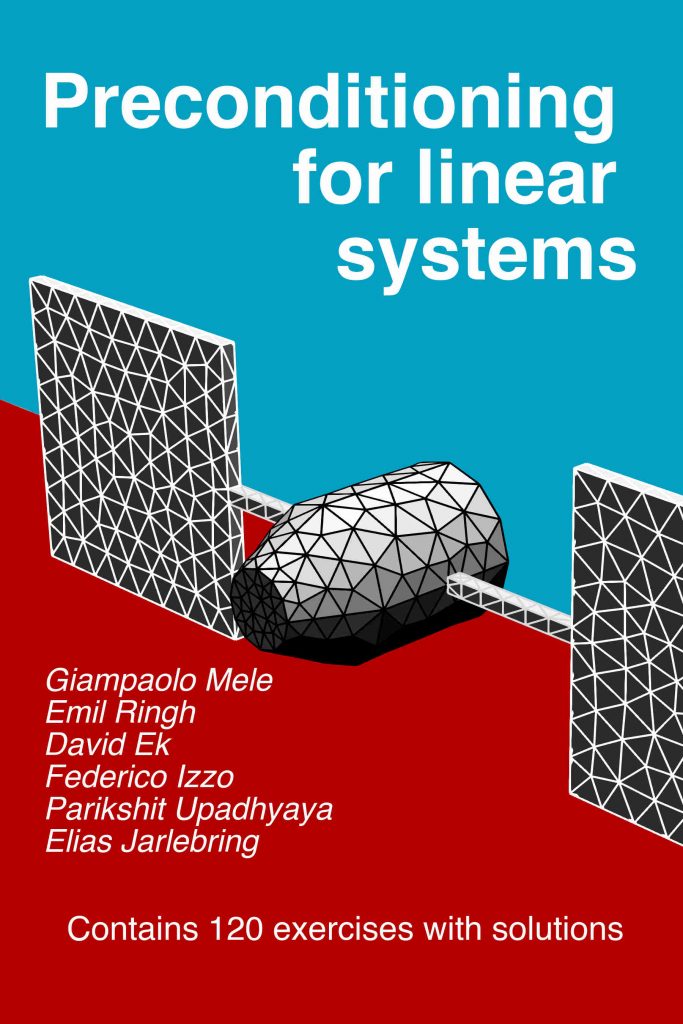
Elias Jarlebring is a Professor in Numerical Linear Algebra at the Department of Mathematics, KTH Royal Institute of Technology, Stockholm. He has held the position of Full Professor since 2021, following his tenure as Associate Professor (2013-2021) and Dahlquist Research Fellow (2011-2013). His research focuses on numerical analysis, numerical linear algebra, matrix computations, and scientific computing. Jarlebring develops linear algebra algorithms to solve problems from various fields including systems and control, acoustics, electromagnetics, data science, quantum mechanics, and quantum chemistry. He is a core developer of NEP-PACK, a scientific computing software package for nonlinear eigenproblems. His recent publications demonstrate significant contributions to computational methods for nonlinear eigenvalue problems, matrix functions, and parameterized linear systems. The research shows a clear trajectory toward increasingly complex applications in quantum computing, data science, and wave propagation problems. Project grant, Swedish research council (2019) Ruth och Nils-Erik Stenbäcks foundation, junior grant (2019) Göran Gustafsson Prize for junior researchers (2014) Project grant for junior researchers, Swedish research council (2014-2018) Professor Jarlebring has supervised numerous PhD students including Vilhelm Peterson Lithell, Gustaf Lorentzon, Siobhán Correnty, Parikshit Upadhyaya, Emil Ringh, Antti Koskela, and Giampaolo Mele. He has received multiple research grants from the Swedish Research Council and serves as editor for BIT Numerical Mathematics, Linear and Multilinear Algebra, NACO Numerical Algebra Control and Optimization, and CALCOLO. He is actively involved in the numerical linear algebra community as a member of ILAS (International Linear Algebra Society), GAMM Activity Group on Numerical Linear Algebra, and the Nordic Numerical Linear Algebra Association. He also contributes to open source projects, particularly in the Julia programming language ecosystem.
Giancarlo Ferrari Trecate is an Adjunct Professor at the Swiss Federal Institute of Technology Lausanne (EPFL) , affiliated with the School of Engineering and the SCI-STI-GFT department. He is also involved in teaching and research through the STI-SGM and EDRS-ENS programs. Research Interests : Automatic control, state estimation, system identification, machine learning, distributed control, hybrid systems, microgrids, biochemical networks, voltage and frequency stabilization in AC/DC microgrids. Publications Trends : His recent work focuses on integrating Neural ODEs and Hamiltonian structures for stable control systems, regret minimization in distributed control, and robust state estimation under uncertainty. Applications include autonomous mobility-on-demand , power grid optimization , and secure microgrid control against cyber-attacks. Scientific Awards : No specific awards mentioned in the provided data. Teaching & Advising : He supervises PhD students in mechanical engineering and teaches courses on Multivariable control and Networked control systems . His lab, DECODE , specializes in Dependable Control and Decision systems.
Karl Henrik Johansson is a Professor at the School of Electrical Engineering and Computer Science, KTH Royal Institute of Technology in Stockholm, Sweden, where he also serves as the Founding Director of Digital Futures. He is a Fellow of both IEEE and the Royal Swedish Academy of Engineering Sciences, and has held leadership positions including Immediate Past President of the European Control Association and IEEE Control Systems Society Vice President Diversity, Outreach & Development. Dr. Johansson earned his MSc in Electrical Engineering and PhD in Automatic Control from Lund University. His academic journey includes visiting positions at prestigious institutions such as UC Berkeley, Caltech, and NTU. His research focuses on networked control systems and cyber-physical systems with applications in transportation, energy, and automation networks. His work investigates fundamental challenges in connecting physical world systems through communication networks, exploring how wireless communication and sensor technology can enhance system robustness, reliability, energy efficiency, and safety. Current research directions include security of cyber-physical systems, distributed optimization, multi-agent systems, and applications to intelligent transportation and energy networks. Analysis of his recent publications reveals a strong focus on distributed optimization algorithms, secure networked control, multi-agent systems, and applications to transportation and energy networks. His work increasingly integrates machine learning techniques with traditional control theory, addressing challenges in privacy-preserving distributed computation, resilient state estimation, and resource allocation in complex networked systems. IEEE Control Systems Society Hendrik W. Bode Lecture Prize (2024) Swedish Research Council Distinguished Professor (2018-2027) Wallenberg Scholar (2009-2026) IFAC Young Author Prize IEEE CSS Distinguished Lecturer (2017-2019) IFAC Outstanding Service Award IEEE Fellow Dr. Johansson has supervised over 100 postdocs and PhD students, with many now holding prominent positions at institutions worldwide. His research has been supported by significant grants including the Swedish Research Council Distinguished Professor Grant (2018-2027), multiple Wallenberg Foundation grants, and numerous EU and national research projects. He has directed major research centers including ACCESS Linnaeus Centre (2009-2016) and Strategic Research Area ICT TNG (2013-2020). His research group operates within the Digital Futures initiative and maintains strong connections with industry partners through projects like the Integrated Transport Research Lab (supported by Scania and Ericsson) and Smart Mobility Lab. The group actively collaborates with international institutions and participates in major EU-funded projects addressing challenges in cyber-physical systems, transportation, and energy networks.
Carlos Guestrin is the Fortinet Founders Professor of Computer Science at Stanford University and serves as Director of the Stanford AI Lab (SAIL) and Senior Fellow at the Institute for Human-Centered AI (HAI). He holds dual roles as Chief Scientist at Visual Layer and Virtue AI. His research focuses on machine learning methods, explainability, fairness, and ethics of AI, alongside systems for scalable AI deployment. Education details are not explicitly provided, but his work spans foundational contributions to machine learning systems (e.g., XGBoost) and explainable AI frameworks like Anchors and LIME. He emphasizes ethical AI through projects like CheckList for model testing and Model Equality Testing for API transparency. His scientific contributions include advancing optimization techniques (AdaScale SGD, TVM compiler) and ethical benchmarks for generative AI. He has been recognized as a Member of the National Academy of Engineering for his transformative impact on AI systems and their societal applications. Guestrin leads interdisciplinary initiatives at SAIL and HAI, fostering collaboration between technical innovation and human-centered design. His work bridges theory and practice, addressing challenges in healthcare (diabetes management systems) and AI security.