معرفی
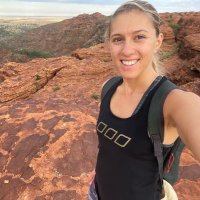
Dr. Hannah Barbour is a Research Fellow at Flinders University's College of Medicine and Public Health and Full Member of the Flinders Health and Medical Research Institute. Based in Darwin, Northern Territory, she specializes in Indigenous health and education research, with a focus on evaluating biomedical training programs for Aboriginal and Torres Strait Islander communities and diabetes-in-pregnancy clinical data linkage projects at Menzies School of Health Research.
Her educational background includes:
- Doctor of Philosophy (2021), The University of Adelaide
- Honours Degree of Bachelor of Arts with First Class Honours (2018), The University of Adelaide
- Bachelor of Social Sciences (2016), The University of Adelaide
Hannah's research integrates spatial analysis (GIS) with investigations into social and environmental determinants of health, particularly within Indigenous and migrant communities. Her work employs mixed-methods approaches to address health disparities in remote Australian settings, examining how geographic, cultural, and socioeconomic factors intersect to influence health outcomes and training pathways.
Her 2025 publication on climate change impacts on Australian freshwater tourism demonstrates her expanding research scope, applying rapid review methodology to analyze environmental, social and economic dimensions of tourism sustainability while maintaining connections to community health frameworks.
Key recognitions include:
- Adelaide Graduate Research Scholarship (2018-2021)
- Postgraduate Research Funding (2019)
- Charles and Frank Fenner Postgraduate Research Grants (2019)
- Graham Lawton Prize for Geography (2018)
As lead researcher for the Ramaciotti Regional and Remote Health Services Training Centre evaluation, she conducts systematic literature reviews and stakeholder engagement to identify critical gaps in Northern Territory health workforce development. Her collaborative projects with Menzies School of Health Research directly inform clinical interventions for Indigenous maternal health.
Her current work operates through partnerships with Northern Territory government agencies and Indigenous community organizations, focusing on practical solutions for health education access in remote regions while contributing to UN Sustainable Development Goals related to health equity and climate resilience.