معرفی
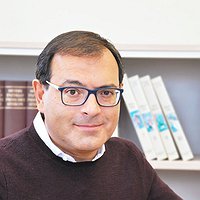
Dr. Giovanni Tarantino is an Associate Professor of Early Modern History at the University of Florence, affiliated with the Department of History, Archaeology, Geography, Arts and Entertainment (SAGAS). He serves as Chair of COST Action CA18140 (People in Motion: Entangled Histories of Displacement across the Mediterranean, 1492-1923) and co-editor of Cromohs: Cyber Review of Modern Historiography and Emotions: History, Culture, Society. His career spans prestigious institutions including the Institute for Advanced Study, Ruhr University Bochum, and University of Western Australia.
- PhD in Early Modern History (University of Florence, 2004)
- MLitt in Early Modern History (University of Florence, 1999, cum laude)
- Post-graduate Certificate in Librarianship (ICCU, 2005)
Tarantino specializes in Early Modern Intellectual History and History of Emotions, with particular focus on religious alterity, tolerance and intolerance, cross-cultural encounters, and visual/cultural stereotypes. His research reveals how religious diversity shaped emotional communities and cultural identities through Mediterranean port cities, Deist writings, and visual representation of minorities.
Recent publications highlight Mediterranean entanglements (2023), religious emotions (2022), and cross-cultural artistic encounters (2022). He challenges the myth of isolated Enlightenment thinkers by contextualizing Martin Clifford, Anthony Collins, and Thomas Gordon within broader intellectual networks and visual culture.
- Hans Kohn Member, Institute for Advanced Study (2008)
- Visiting Research Fellow, Ruhr University Bochum (2018)
- ARC Centre of Excellence for the History of Emotions, Postdoctoral Fellow (2013-2016)
A dedicated academic, Tarantino serves on the Scientific Committee of the Italian Historical Journal, the Advisory Board of Rivista Storica Italiana, and as Business Manager for Emotions: History, Culture, Society. His work bridges historiography, visual analysis, and emotional frameworks to reinterpret early modern religious and cultural dynamics.