
معرفی
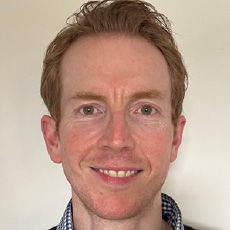
Gethin Davison is an Associate Professor of Urban and Regional Planning at the University of Birmingham's School of Geography, Earth and Environmental Sciences. He has held academic positions at Oxford Brookes University and the University of New South Wales (Sydney), alongside experience as a local government planning officer. His roles include course director, Royal Town Planning Institute (RTPI) academic lead, and director of postgraduate research. Davison's research and teaching emphasize interdisciplinary approaches, blending human geography, urban design, and planning to explore governance of design, people-place relationships, and social justice in urban contexts.
Education:
- BA (Hons) in Geography
- MA in Town Planning
- PhD (specific field not explicitly stated)
His research interests focus on the governance of urban design processes, particularly how design decisions intersect with social equity and community dynamics. He critically examines the impact of planning policies on neighborhood character and housing affordability, often using case studies from Australia and the UK. His work highlights the tension between design excellence and social inclusion, advocating for participatory frameworks that balance aesthetic and ethical considerations.
Research has been supported by grants from the Australian Research Council (ARC) and the Australian Housing and Urban Research Institute (AHURI). His publications address topics like architectural design competitions, renters' social interactions in condominiums, and strategies for equitable high-density neighborhoods. He also explores the nexus between social housing and democratic planning systems.
As a资深 advisor, he welcomes research students focusing on urban design, planning, and governance, particularly those engaging with social justice themes. His contributions to pedagogy include advancing planning education through collaborative, interdisciplinary methods.
Related research affiliations include the 'Cities, Regions and Mobility' and 'Human Geography' research groups within his school. His work often intersects with broader themes of sustainability, spatial justice, and the evolving role of design in urban regeneration.

.jpg)
