معرفی
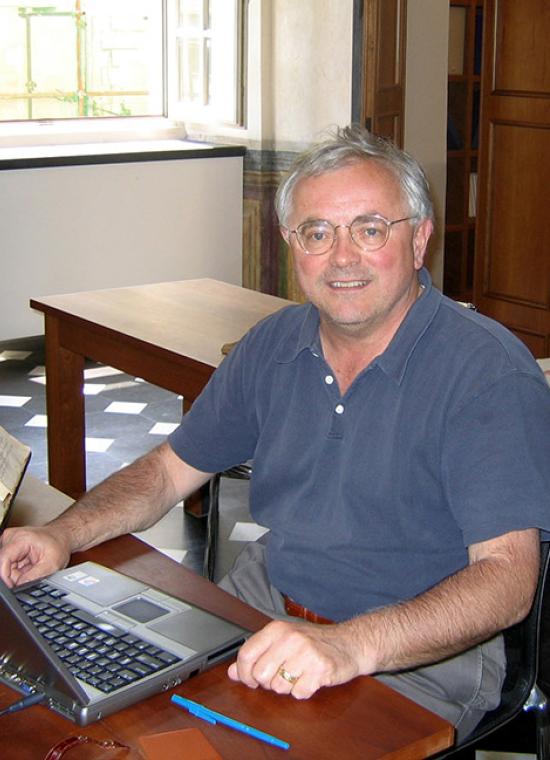
George L. Gorse is the Viola Horton Professor of Art and Professor of Art History at Pomona College, where he has been a faculty member since 1980. He is on leave for the 2025–2026 academic year. His work bridges medieval and Renaissance studies with modern architectural sustainability, focusing on urbanism in Genoa from the 11th to 16th centuries.
Education:
- Ph.D., Brown University
- Master of Arts, Brown University
- Bachelor of Arts, The Johns Hopkins University
His research explores the architecture and urban development of Genoa, particularly the roles of noble families, palaces, gardens, and civic pageantry. He investigates how urban spaces reflect political power, social hierarchy, and cultural identity, with a special interest in the Strada Nuova and triumphal entries. His interdisciplinary approach connects historical urbanism with contemporary issues in sustainability and modern architecture.
The recent publications highlight a consistent focus on Renaissance Genoa, political iconography, and the interplay between architecture and power. His work spans from detailed studies of portraiture and court symbolism to broad analyses of urban typology and civic identity, reflecting a deep engagement with both visual culture and spatial politics.
Scientific Awards and Honors:
- Bogliasco Institute, Genoa, Italy – Visiting Fellow (2001, 2018)
- National Endowment for the Humanities – Summer Seminars (1998, 1994, 1988)
- Institute for Advanced Study, Princeton – Visiting Member (1989–90)
- Villa I Tatti, Harvard – Fellow (1988–89)
- American Council of Learned Societies – Summer Research Grants (1984, 1981)
George Gorse has advised numerous students and contributed to curriculum development through courses such as Gendering the Renaissance, Modern Architecture & Sustainability, and Medieval & Renaissance Cities. While specific grant details are not listed, his repeated NEH and ACLS funding indicates strong external support for his research. He has also co-edited influential volumes on courtly spatial politics, demonstrating leadership in the scholarly community.
Though no formal lab or research team is mentioned, his affiliations with Villa I Tatti, the Bogliasco Institute, and the American Academy in Rome suggest collaborative, international scholarly networks focused on Italian art and urban history.