معرفی
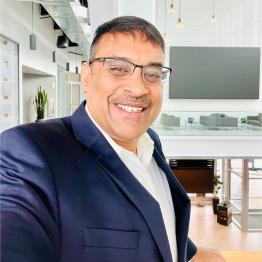
Gaurav Bansal is an interdisciplinary political economist based at the School of Global Development, University of East Anglia, with a strong research focus on rural transformation, agrarian political economy, and social movements in India under neoliberalism. He has also held an external position as a Teaching Fellow at SOAS, University of London (October 2022–June 2023), contributing to development studies curriculum and pedagogy.
- University: University of East Anglia
- School: School of Global Development
- External Role: Teaching Fellow, SOAS, University of London (2022–2023)
Academic Background:
- MPhil in Planning and Development, Indian Institute of Technology, Mumbai
- MA in Economics, University of Hyderabad
- BA in Economics, Shri Ram College of Commerce, Delhi University
His research centers on the political economy of rural India, with a regional focus on Punjab in the post-Green Revolution era. He investigates rural labor, agrarian capital, class formation, and the impact of neoliberal policies on rural livelihoods. Drawing on Marxian political economy, he critically engages with the unresolved 'Agrarian Question' in India. His methodological approach combines qualitative and quantitative field research, enabling deep empirical grounding in rural communities.
His recent publications, extending into 2025, examine the 2020–2021 farmers' protests, youth migration from Punjab, contract farming, and state-society relations. These works reflect a consistent thematic trajectory centered on agrarian crisis, rural dissent, and structural transformation in India's countryside. His articles appear in leading journals such as Economic and Political Weekly, The Journal of Peasant Studies, and Frontline, as well as in edited volumes from Routledge.
Scientific Awards and Recognition:
- No formal awards listed in the provided text.
Gaurav Bansal is actively involved in academic service, including peer review for journals such as Forum for Development Studies and Millenial Asia, and participation in conferences like the International Initiative for Promoting Political Economy (IIPPE). He has no listed PhD or Master’s students, suggesting he may be in an early or mid-stage career without formal supervision responsibilities yet. He is not associated with any specific lab or research team in the provided text, though his work is collaborative, as seen in co-authored publications. His ongoing research indicates a commitment to critical development studies and rural transformation in South Asia.
حوزههای پژوهشی