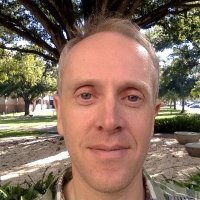
معرفی
G. Wadge is a prominent researcher affiliated with the Environmental Systems Science Centre at the University of Reading, UK. His work focuses on volcanology, geophysics, and remote sensing, particularly in monitoring volcanic activity using advanced radar technologies such as AVTIS. He has led and contributed to numerous studies on the Soufrière Hills Volcano in Montserrat, analyzing lava dome growth, mass wasting, and pyroclastic flow hazards.
- Institution: University of Reading
- Department: Environmental Systems Science Centre
- Research Focus: Volcanic Processes, Remote Sensing, Geophysical Monitoring
His research interests include volcanology, geophysics, remote sensing, lava dome dynamics, radar imaging, and environmental monitoring. He has extensively studied the behavior of andesitic lava domes, particularly at Soufrière Hills, using ground-based radar and seismic data to quantify extrusion rates, talus formation, and pyroclastic flow volumes. His work bridges field observations with technical instrumentation development.
The recent articles highlight a consistent focus on lava dome evolution, volcanic hazard assessment, and the use of millimeter-wave radar for all-weather volcano monitoring. These studies often combine topographic imaging with seismicity data to model mass redistribution during eruptions. The interdisciplinary nature of his work spans geophysics, instrumentation, and natural hazard mitigation.
While no specific scientific awards are mentioned in the provided text, his sustained publication record in high-impact journals such as Journal of Geophysical Research and Geophysical Research Letters reflects significant scholarly contribution.
Wadge has collaborated with institutions including the British Geological Survey, Lancaster University, and the Montserrat Volcano Observatory. His research is supported by NERC grants, indicating active funding and project leadership. He has advised or collaborated with multiple researchers and students, though specific names are not listed. His work includes both theoretical modeling and field deployment of novel sensors.
He leads research on volcanic monitoring systems and hazard evaluation, particularly through the development and application of AVTIS. This instrument enables continuous topographic and thermal monitoring of volcanoes, even under cloudy conditions, making it invaluable for real-time hazard assessment.