معرفی
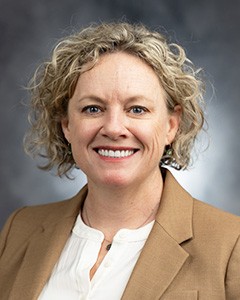
Prof. Dr. Frauke Koppelin is a Professor of Health Sciences at Jade University of Applied Sciences in Oldenburg, Germany, where she works in the Department of Civil Engineering Geoinformation Health Technology. She has held this position since April 2011 and also serves as Head of the Master Public Health continuing education program since 2013. Prior to this, she was a Professor of Health Sciences at the University of Applied Sciences Emden-Leer from October 2001 to March 2011.
Her research focuses on several critical areas in public health: ensuring health in changing working environments, promoting healthy aging and providing care for people living alone with dementia, implementing technology-supported prevention in health promotion, designing gender-sensitive health approaches, developing evidence-based care in digital healthcare systems, and creating care concepts for vulnerable populations during disasters.
Prof. Koppelin leads multiple significant research projects including LifeGRID II (focusing on saving lives in flood and energy-critical situations), Future Lab Health, Interreg North Sea Project FIER, and the Care and Innovation Network Hub. Her publication record demonstrates a strong emphasis on aging populations, health technology development, disaster preparedness in healthcare, and gender-sensitive health approaches.
- Member of OFFIS EV. Oldenburg – Institute of Computer Science (since October 2024)
- Membership as an expert at the Federal Institute for Public Health (BIÖG) (since February 2025)
- Member of the Scientific Advisory Board of the Federal Center for Health Education (BZgA) (since March 2023)
- Member of the Scientific Advisory Board of the Dementia Network Oldenburg (since 2017)
- Chair of the Scientific Advisory Board of the LVG (since 2017)
- Spokesperson of the Prevention and Health Promotion Working Group of the German Society for Medical Sociology (since 2015)
Prof. Koppelin actively supervises doctoral students working on diverse topics including older people's participation in health technology development, nursing students' stress factors, and diagnosis in the latent phase of labor. Her research approach emphasizes practical applications and implementation in real-world healthcare settings, particularly focusing on vulnerable populations and disaster preparedness.