معرفی
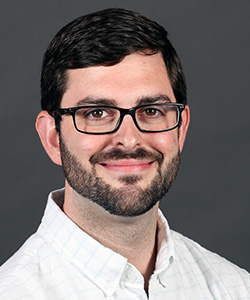
Frank Schaper is a Professor in the Department of Chemistry at the University of Montreal, affiliated with the Faculty of Arts and Sciences. He holds a Diplom (MSc) from the University of Konstanz (1995) and a PhD in Chemistry from the same institution (2002), followed by postdoctoral research in the USA and Switzerland. His research focuses on catalysis, green chemistry, and the synthesis of biodegradable polymers, particularly developing catalysts for lactide polymerization. He leads multiple research projects funded by agencies such as the CRSNG and FQRNT, including strategic initiatives like the Centre en chimie verte et catalyse (CCVC).
Education:
- 1995: Diplom (MSc) in Chemistry, University of Konstanz
- 2002: PhD in Chemistry, University of Konstanz
- Postdoctoral Fellowships at University of Chicago (2002-2003), University of Konstanz (2003-2004), and University of Basel (2004-2005)
Research Interests:
Dr. Schaper’s work centers on designing transition metal-based catalysts for sustainable polymer production. His group explores earth-abundant metals like copper and zinc to create efficient catalysts for lactide polymerization, aiming to replace non-biodegradable plastics. Recent studies emphasize stereocontrol in polymerization, anion effects in catalytic reactivity, and advanced Chan-Lam coupling reactions for organic synthesis.
Grants & Projects:
- 2022-2028: Reaction mechanisms of catalytic reactions using earth-abundant metals (CRSNG)
- 2019-2027: CCVC strategic research hub (FQRNT)
- 2022-2024: Electrochemically-driven Chan-Lam coupling reactions (CRSNG)
Advising:
He has supervised 11 graduate students, including PhD candidates focusing on copper and zinc catalyst systems and Master’s students exploring lactide polymerization mechanisms. Recent advisees include Fatemeh Dordahan (2022), Pargol Daneshmandkashani (2019), and Valérie Hardouin Duparc (2019).
Labs & Teams:
He is a core member of the CCVC, a multidisciplinary research team advancing green chemistry and catalytic innovation. His laboratory facilities include advanced NMR platforms and X-ray diffraction equipment supported by strategic infrastructure grants.