معرفی
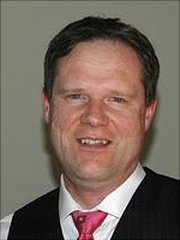
Parisa Mehrkhodavandi is a Professor in the Department of Chemistry within the Faculty of Science at the University of British Columbia. Her research program focuses on addressing environmental challenges through catalytic development of green polymers derived from biorenewable sources or designed for biodegradability in composts, oceans, and the human body.
Her research interests center on two primary areas: (1) Catalyst development with emphasis on structure-function relationships, and (2) Synthesis and characterization of bio-based/biodegradable/green polymers. She develops Lewis acidic metal centers supported by chiral ligands for enantioselective ring-opening polymerization of cyclic lactones, ethers, and epoxides, while also exploring chiral indium complexes for organic transformations. This interdisciplinary work spans organic, inorganic, organometallic, and polymer chemistry.
Her recent publications demonstrate significant contributions to indium and zinc catalyst systems for lactide polymerization, block copolymer synthesis, and thermorheological analysis of biobased polymers. The research output reveals consistent focus on stereocontrol, catalyst aggregation effects, and sustainable material design.
Scientific awards include:
- NSERC University Faculty Award (2005)
- Government of France Mobility Award (2008)
- Ichikizaki Travel Award (2008/2010)
- ICCC-41 Rising Star Scholar (2014)
- UBC Killam Research Fellowship (2015)
- Alexander von Humboldt Fellowship (2015)
Mehrkhodavandi's group trains students in air/oxygen-sensitive synthetic techniques, chromatography, NMR spectroscopy, enantioselective methodology, and mechanistic investigation. Her research has been supported by major grants including NSERC funding and international fellowships, enabling interdisciplinary collaborations across polymer chemistry and materials science.
The Mehrkhodavandi Research Group operates within UBC's Department of Chemistry, utilizing advanced facilities for polymer synthesis and characterization. The group maintains strong connections with industrial partners interested in sustainable polymer applications while contributing to academic training through graduate supervision and collaborative research projects.