معرفی
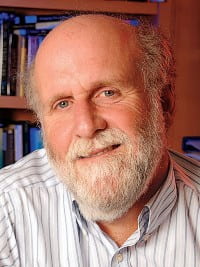
Felipe De Brigard is a Professor of Philosophy and Associate Professor of Psychology and Neuroscience at Duke University. He is an Associate of the Duke Initiative for Science & Society and Member of the Center for Cognitive Neuroscience. His research at the intersection of philosophy, psychology, and neuroscience focuses on memory-imagination interactions, counterfactual thinking, and their implications for moral cognition and identity.
- Harvard University Postdoctoral Fellow in Philosophy (2011-2013)
- Ph.D. and M.A. from University of North Carolina, Chapel Hill
- M.A. from Tufts University
- Undergraduate degree from Universidad Nacional de Colombia
His work challenges traditional memory theories, proposing memory as a system for hypothetical thinking rather than mere recall. Current projects examine how episodic and semantic memory contribute to counterfactual simulations, with recent 2025 publications on memory fidelity in plausible counterfactuals and neural connectivity analysis. He uses fMRI and eye-tracking to explore autobiographical memory modification, moral cognition, and anxiety-related neural patterns.
Major grants include:
- $1.8M Templeton Foundation grant for Summer Seminars in Neuroscience and Philosophy (2020-2025)
- National Institutes of Health funding for aging and memory research (2018-2025)
In the Imagination and Modal Cognition Lab, he leads interdisciplinary research on memory's role in future planning, identity formation, and therapeutic applications for anxiety. His empirical approach to philosophical questions has sparked debates about neuroscience-philosophy integration, particularly regarding consciousness and moral responsibility theories.