معرفی
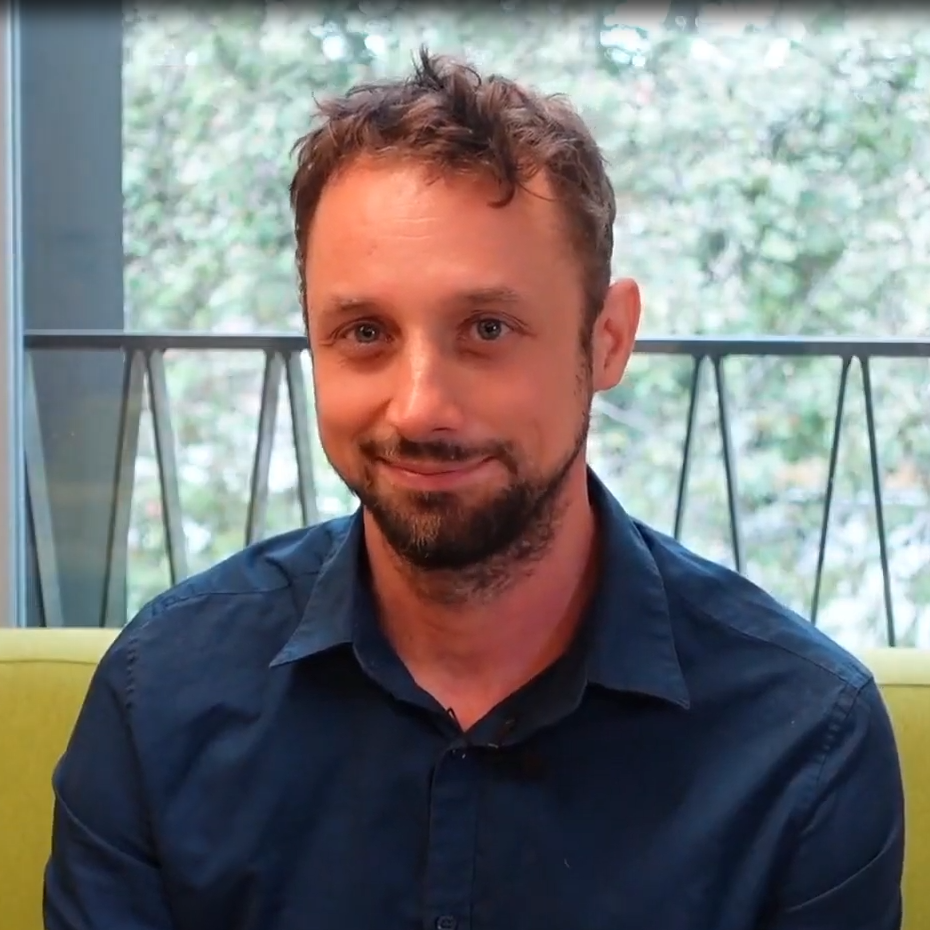
Fabien Vergnet is an Associate Professor at Sorbonne University and a member of the Laboratoire Jacques-Louis Lions (LJLL) in Paris, France. He is also affiliated with the COMMEDIA project-team at Inria Paris. His academic journey includes a PhD at Université Paris-Saclay under the supervision of Astrid Decoene, Sébastien Martin, and Bertrand Maury, followed by postdoctoral research at École Polytechnique with Aline Lefebvre.
His research focuses on the mathematical study of fluid-structure interaction problems with biomedical applications and the development of numerical methods to solve transmission problems. His work bridges theoretical mathematics with practical computational approaches, particularly in modeling biological systems involving fluid dynamics. He has made significant contributions to understanding cilia interactions, fluid-structure-contact problems, and active particle suspensions.
Analysis of his recent publications reveals a consistent focus on developing mathematically rigorous models for complex fluid-structure interactions, with increasing emphasis on biomedical applications. His work demonstrates strong theoretical foundations combined with practical numerical implementations, often collaborating with researchers from multiple institutions across France.
Fabien Vergnet actively supervises doctoral students including Romain Lopez-Surjus, Marguerite Champion, and Daniele Corti, while securing research funding through grants such as the PEPS Young Researchers award and Springboards for new entrants at Sorbonne University. His teaching portfolio at Polytech Sorbonne includes core mathematics courses in numerical analysis, differential equations, and optimization.
As part of the COMMEDIA project-team at Inria Paris, he collaborates on interdisciplinary research that combines mathematical modeling, numerical analysis, and scientific computing to address complex problems in fluid dynamics and biomedical applications. His work environment fosters collaboration between mathematicians, computer scientists, and domain specialists to develop innovative computational approaches.