معرفی
Eve Kiiler is a Doctoral Student at Tallinn University's School of Arts, Design and Architecture and serves as a Lecturer at the Baltic Film, Media, Arts and Communication School (BFM) since September 2015. Her academic work bridges contemporary art practice with theoretical exploration of urban environments.
Her research focuses on contemporary photography and urban spaces, particularly through her project Urban Observations in the Context of Everyday Aesthetics, which documents the multilayered time-space of living environments. Kiiler's work examines how architectural forms, historical layers, and human absence interact in urban landscapes, transforming familiar spaces into fragmented heterotopias. Her photographic approach reveals the 'genius loci' (spirit of place) while simultaneously exposing the emptiness and disconnectedness of modern urban environments.
Analysis of her recent publications shows a consistent focus on Estonian urban landscapes, particularly Tallinn and Haapsalu, with increasing output since 2018. Her work demonstrates how photography can document the transformation of urban spaces, capturing moments where architecture, history, and absence converge to create new spatial narratives. The recurring themes in her work include the relationship between built environment and human presence, the transformation of urban spaces through photographic documentation, and the exploration of Estonian architectural heritage.
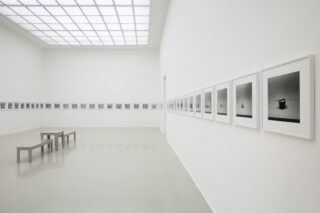
Kiiler has received support from the Estonian Cultural Endowment for Fine and Applied Arts Endowment Fund for Academic Staff for her exhibition work. Her exhibitions have been presented both nationally and internationally, including at the Tallinn University Academic Library gallery and the Festival de la Photographie Sociale in Carcassonne, France.
Her artistic practice involves extensive fieldwork in urban environments, particularly focusing on how spaces function without human presence. The 'Alone in the City' exhibition demonstrates her methodology of capturing urban spaces during transitional periods, revealing the underlying structures and aesthetics that normally remain obscured by daily activity. Her work has been supported by Tallinn University BFM, indicating institutional recognition of her research contributions.