معرفی
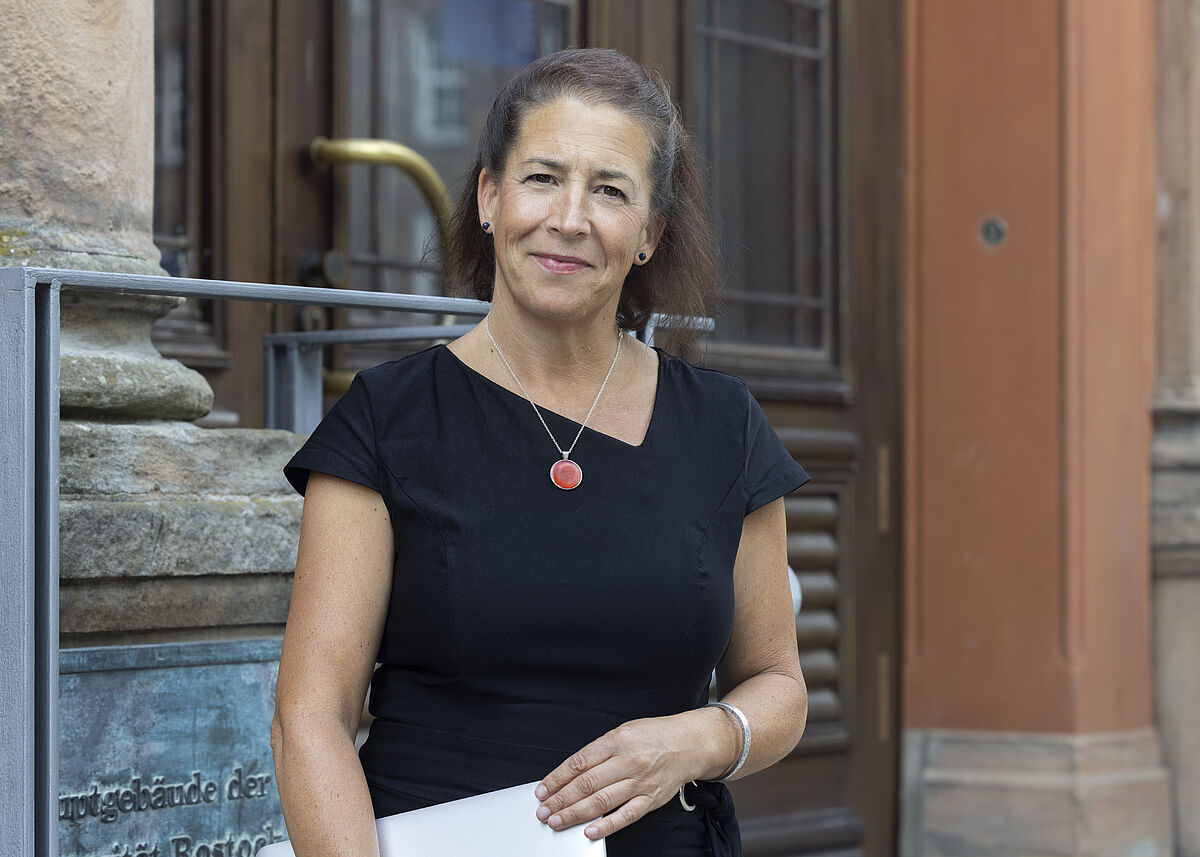
Prof. Dr. Esther Schomacher serves as a Visiting Professor of Italian Literature at the Institute of Romance Studies within the Faculty of Languages and Literature at Humboldt University of Berlin, having assumed the Chair of Italian Literature starting in the winter semester of 2023/2024. Previously, she worked as a research assistant at the Chair of Cultural Theory and Cultural Analysis under Prof. Dr. Jan Söffner at Zeppelin University, Friedrichshafen, and at the Romance Studies Department of Ruhr University Bochum under Prof. Dr. Rudolf Behrens.
Her research program centers on the intersection of literature and science—particularly economics—alongside media and writing history, literature and emotion, embodiment studies, gender history, and contemporary Italian political philosophy (Italian Theory). Her current project "L'uomo del Rinascimento?" examines masculinity figurations across Italian Renaissance literature, philosophy, and science. Dr. Schomacher's scholarly approach consistently bridges literary analysis with economic theory, cognitive studies, and gender perspectives, as reflected in her extensive publication record spanning from 2007 to 2024.
Her recent publications reveal a sustained engagement with economic metaphors in literature, particularly in the works of Italo Svevo and Carlo Goldoni, while also exploring Renaissance comedy and contemporary Italian Theory's response to crises like the pandemic. This interdisciplinary focus culminates in her monograph "Writing and Money around 1900. Italo Svevo's Media" (2021) and the co-edited volume "The Culture of Money. Implications for Contemporary Economics" (2024), demonstrating how literary texts engage with economic concepts across historical periods.
Dr. Schomacher actively contributes to academic discourse through editorial work, including the journal "Aghios: Rivista di studi sveviani" and the volume "Italian Theory" (2020). Her research methodology incorporates enactive criticism and embodied cognition approaches, reflecting her commitment to interdisciplinary scholarship that challenges traditional boundaries between literary studies, economics, and philosophy. She maintains regular consultation hours for students at her office in Dorotheenstraße 65, Room 4.38, Berlin.