معرفی
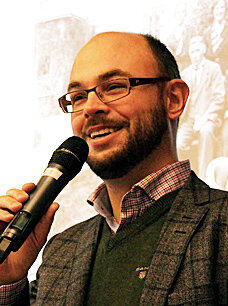
Erik Bengtsson is an Associate Professor and Senior Lecturer in Economic History at Lund University's Department of Economic History, Faculty of Social Sciences. He has served as Deputy Head of Department and has been at Lund University since 2015, initially as a postdoc (2015-2017), then as an associate senior lecturer (2017-2020), and as a senior lecturer since December 2020. He earned his PhD from Gothenburg in 2013 and became a docent (equivalent to habilitation) in Economic History in 2019.
His research spans two primary domains: historical living standards, material culture, wealth and inequality in Europe since the seventeenth century; and historical and comparative political economy, including political history. His work on wealth inequality in Sweden (1750-1900) and Stockholm (1650-1750) has appeared in The Economic History Review, while his research on capital shares and income inequality has been published in the Journal of Economic History. He led a major Swedish Research Council project (2019-2024) on incomes in Sweden 1870-1970, producing significant findings on incomes, work, gender and inequality in Stockholm.
Bengtsson's scholarly output demonstrates consistent focus on long-term economic trends, with recent publications examining the incomes of the rich during the 'great levelling' period, economic inequality in the Nordics during neoliberalism, and wage bargaining transformations in Scandinavia. His work connects historical analysis with contemporary economic policy debates, particularly regarding inequality and labor market institutions.
His scientific contributions have been recognized through active participation in major research projects including 'Neoliberalism in the Nordics' (2020-2025), a project on material living standards in Sweden (1680-1860), and ongoing work on Swedish democratization. He has received research funding from the Swedish Research Council and collaborates extensively with scholars across Scandinavia and internationally.
As an educator, Bengtsson has directed undergraduate courses in Global Economic History, The Economic and Social History of Sweden, and The Rise and Fall of the Swedish Model. At the master's level, he directs courses on The History of Economic Inequality and The History of Economic Thought. He has also supervised doctoral research, including Marcus Falk's dissertation on rural Swedish households. His outreach includes public lectures at Lund City Library and Dalby Library in 2024, demonstrating commitment to engaging broader audiences with historical economic insights.