معرفی
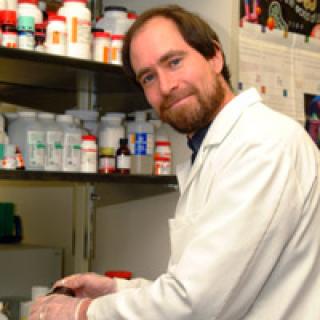
Dr. Eric O. Freed serves as a Research Professor at the National Cancer Institute (NCI) in Frederick, Maryland, where he leads the Virus-Cell Interaction Section within the Center for Cancer Research. He concurrently holds the position of Editor-in-Chief for the journal Viruses, reflecting his leadership in the virology community. His research program focuses on elucidating molecular mechanisms of HIV replication with particular emphasis on virus assembly and maturation processes.
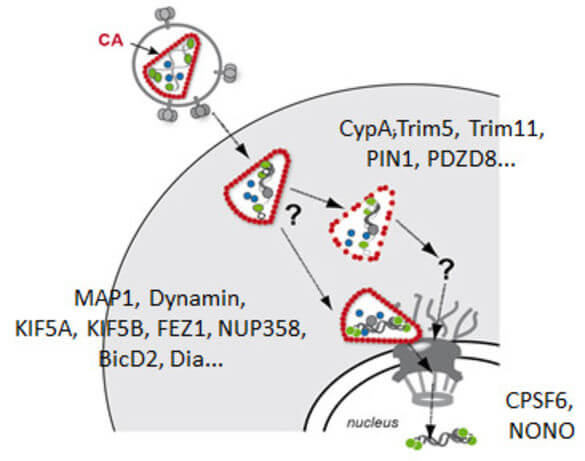
Dr. Freed's laboratory investigates the structural and functional dynamics of HIV capsid assembly, nucleocapsid protein functions, and IP6-mediated maturation pathways. His work bridges fundamental virology with therapeutic development, examining how mutations confer resistance to antiretroviral drugs and how structural vulnerabilities can be targeted for intervention. The research employs multidisciplinary approaches integrating structural biology, molecular virology, and biochemical techniques to dissect replication mechanisms at atomic resolution.
With over 145 publications, Dr. Freed's recent 2025 output demonstrates continued leadership in high-impact virology research. His articles in Science Advances and Nature Communications reveal novel insights into HIV-1 resistance mechanisms, capsid assembly dynamics, and structural bases for maturation inhibition. These studies consistently feature interdisciplinary collaborations and advanced methodologies including cryo-EM and NMR spectroscopy.
As an NCI intramural investigator, Dr. Freed's research receives comprehensive NIH funding supporting both basic science and translational initiatives. He mentors postdoctoral fellows and graduate students through NIH training programs, emphasizing technical rigor and innovative problem-solving in virology research. His laboratory maintains active national and international collaborations that enhance research scope and impact.
The Virus-Cell Interaction Section operates as a dynamic research environment combining structural biology expertise with advanced virology platforms. The team's work on HIV assembly intermediates and maturation inhibitors directly informs antiretroviral development efforts, positioning the laboratory at the forefront of HIV therapeutic research.