معرفی
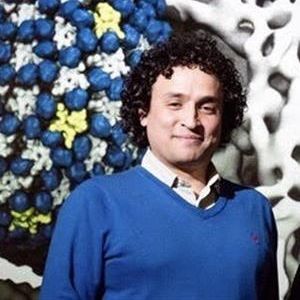
Juan Perilla serves as Associate Professor of Chemistry & Biochemistry in the College of Arts & Sciences at the University of Delaware, where he leads computational research integrating biophysical chemistry, structural biology, and virology to investigate viral mechanisms at atomic resolution using advanced simulation methodologies.
His educational trajectory includes a Ph.D. in Chemistry from Johns Hopkins University (2011), focusing on transition state theory for protein conformational changes, followed by postdoctoral training at the University of Illinois at Urbana-Champaign under Klaus Schulten, where he pioneered large-scale simulations of viral systems and cellular organelles.
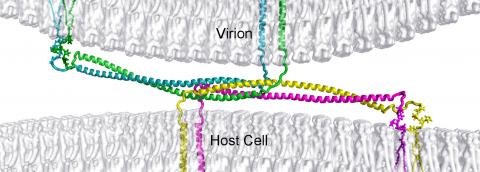
Research centers on multi-scale computational approaches spanning quantum mechanics to mesoscale modeling, with primary emphasis on HIV-1 capsid structure, dynamics, and host interactions. His group develops novel frameworks for petascale/exascale computing to simulate billion-atom biomolecular systems, integrating cryo-EM and NMR data for atomic-level insights into viral assembly, nuclear entry, and drug targeting mechanisms.
Recent publication analysis reveals sustained focus on HIV capsid mechanics and viral replication cycles, with growing integration of machine learning for simulation analysis and efficient coarse-graining techniques. Key trends include elucidating capsid elasticity in nuclear transport, IP6-mediated assembly mechanisms, and resistance pathways for antiretroviral drugs through structural dynamics.
No specific scientific awards or fellowships are documented in available sources.
As principal investigator, Dr. Perilla mentors graduate students in computational biophysics while securing computational resources through grants enabling access to national supercomputing facilities including LANL Grizzly and TACC Frontera for billion-atom simulations.
The Biophysical Chemistry Laboratory employs high-performance computing to analyze petabyte-scale simulation datasets, developing open-source tools for biomolecular container analysis while maintaining active collaborations with experimental virology groups to validate computational findings and drive therapeutic discovery.