معرفی
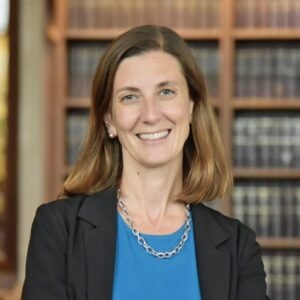
Enrique Armijo is a Professor of Law at Elon University School of Law with concurrent fellowships at Yale Law School's Information Society Project, George Washington University's Institute for Data, Democracy, and Politics, and UNC-Chapel Hill's Center for Information, Technology and Public Life. His expertise spans constitutional law, media regulation, and digital free speech challenges.
His educational background includes a B.A. from the University of Florida, an M.A. from UNC-Chapel Hill, and a J.D. from the University of North Carolina where he served as Editor-in-Chief of the North Carolina Law Review.
Armijo's research critically examines First Amendment doctrine in digital contexts, focusing on disinformation ecosystems, platform governance, and transnational free expression. His scholarship analyzes how algorithmic content moderation, Section 230 immunity, and government-provided internet access reshape constitutional protections while addressing societal harms from online falsehoods.
Analysis of his 2021-2025 publications reveals consistent exploration of disinformation counter-strategies, comparative must-carry regulations, and equity-based speech remedies. His work demonstrates how traditional First Amendment frameworks struggle with digital-scale misinformation while advocating for nuanced approaches that balance free expression with democratic integrity.
His scholarly impact is evidenced by citations from federal agencies and U.S. Senate testimony. Key recognitions include:
- Yale Law School Information Society Project Fellow
- George Washington University Institute for Data, Democracy, and Politics Faculty Fellow
- UNC-Chapel Hill Center for Information, Technology and Public Life Fellow
Armijo has advised governments and NGOs on media law reform across Africa, Asia, and the Middle East, including U.S. State Department projects in Myanmar. His pre-academic career featured landmark Supreme Court arguments in FCC v. Fox Television Stations and Boumediene v. Bush. He actively shapes public discourse through NPR, Voice of America, and major print media outlets.