معرفی
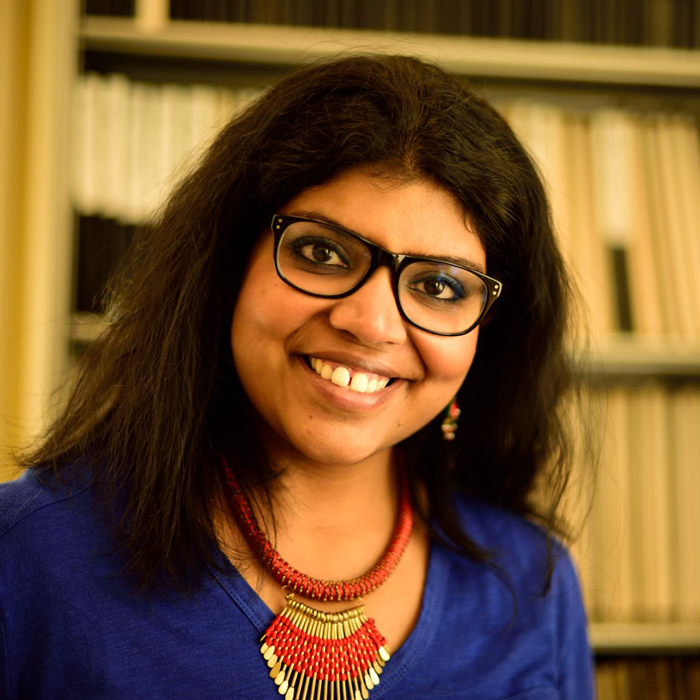
Enakshi Roy serves as an Assistant Professor in the Department of Mass Communication within Towson University's College of Fine Arts and Communication. She teaches journalism and mass communication courses, drawing from seven years of professional media experience in India, and previously held faculty positions at Western Kentucky University's School of Media.
Her academic credentials include:
- Ph.D. in Journalism and Mass Communication from E.W. Scripps School of Journalism, Ohio University
Dr. Roy's research critically examines intersections of media policy, cultural representation, and digital governance. Her primary areas of inquiry encompass:
- Freedom of speech and First Amendment jurisprudence
- Internet censorship mechanisms across democratic systems
- Media and journalism ecosystems in India
- Bollywood industry dynamics and global influence
- Gender, sexuality, and feminist media studies
Her dissertation investigated comparative internet governance practices between the United States and India and their psychological impacts on online discourse. This foundational work informs her ongoing analysis of digital rights and cultural expression in transnational contexts.
Analysis of her 15 most recent publications (2011-2025) reveals three dominant research trajectories: digital governance in South Asia (particularly India's evolving internet policies), gender representation in global media (with focus on Bollywood and K-Pop), and celebrity influence on social issues. Her methodological approach combines content analysis with critical policy studies, often examining visual media and social platform interactions to understand cultural power dynamics.
Dr. Roy's scholarly contributions have been recognized with:
- Top Debut Faculty Paper Award (2018) from AEJMC's Media Law and Policy Division
- KTA Advisors Research Grant (2019)
Leveraging her professional background as a reporter for The Times of India and producer for Radio City 91.1 FM, she mentors students in practical journalism while emphasizing critical analysis of media systems. Her industry experience directly informs classroom instruction on ethical reporting and digital media production. Though specific current grants aren't detailed, her sustained publication record and competitive awards indicate ongoing research funding.
No dedicated research laboratories or specialized teams are referenced in available materials, though her work suggests collaboration with digital media and South Asian studies scholars.