معرفی
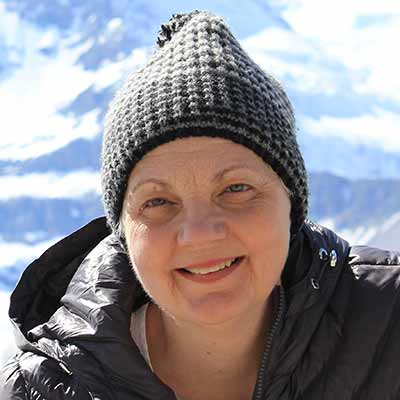
Emily Graber is an Assistant Professor in the Department of Computer and Information Science at Allegheny College, where she integrates music, technology, and cognitive science. Her interdisciplinary work bridges performance, computation, and neuroscience to explore how people experience music.
Her educational background includes a B.M.A. in Violin Performance and a B.S. in Interdisciplinary Physics from the University of Michigan, followed by a Ph.D. from Stanford University’s Center for Computer Research in Music and Acoustics (CCRMA). She has held significant research positions, including a postdoctoral fellowship at Sunnybrook Research Institute and a Marie Skłodowska-Curie Fellowship at IRCAM in Paris.
Dr. Graber's research centers on enhancing listener engagement with contemporary classical music through interactive installations and embodied interfaces. She investigates how performers and audiences anticipate tempo changes, using neuroimaging and sensorimotor synchronization techniques. Her work also extends to music therapy for cochlear implant users, exploring how musical training can aid speech processing rehabilitation.
Her research output reflects a strong trend in human-computer interaction in music, blending artistic practice with empirical cognitive studies. Projects like EAR Stretch demonstrate innovative applications of technology to deepen musical understanding and enjoyment, particularly in non-traditional listening contexts.
- Marie Skłodowska-Curie Fellowship
- Postdoctoral Fellowship at Sunnybrook Research Institute
Dr. Graber has been involved in significant research grants and projects, including the Marie Skłodowska-Curie-funded EAR Stretch project at IRCAM, which explored active tempo control via conductor interfaces to enhance listener predictions. Her postdoctoral work was supported by institutions in Toronto focused on hearing rehabilitation. She mentors students in interdisciplinary research, though specific advisees are not named in the source material.
She has been affiliated with the Science and Technology of Music and Sounds (STMS) lab at IRCAM, hosted by CNRS, and has collaborated with leading researchers such as Elaine Chew. Her artistic and research installations have been presented at venues including IRCAM, University of Oslo, ACM Multimedia, Banff Centre, and Stanford’s CCRMA.