معرفی
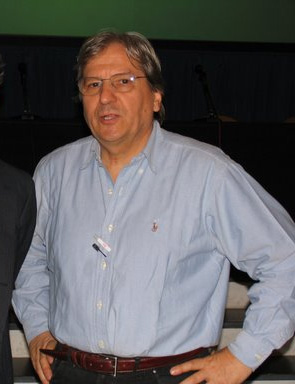
Emilio Carbone is a Professor of Physiology at the School of Hospital Pharmacy, University of Torino, Italy, where he has held a full professorship in General Physiology since 1986. He also serves as a Tutor at the Doctorate School of Neuroscience at the University of Torino since 2000. His academic career spans multiple international institutions including research positions at the National Institute of Mental Health in Bethesda, MD, and the Max Planck Institute for Psychiatry in Munich.
Carbone's research focuses on the biophysics and physiology of voltage-gated ion channels, particularly calcium channels. His work spans several key areas including the discovery of neuronal 'low-voltage activated' T-type calcium channels, the role of calcium channels in neurotransmitter release, and the development of novel biosensors using nano-structured materials. His research has evolved from foundational studies on sodium and potassium channels to current work on interfacing excitable cells with solid-state surfaces.
His recent publications demonstrate a continued focus on L-type and T-type calcium channels in chromaffin cells, with applications to understanding hormone secretion mechanisms and developing new biosensor technologies. The research trajectory shows increasing integration of nanotechnology with traditional electrophysiological approaches.
- 2006-present Member elected of the Academia Europaea. Section 'Physiology & Medicine'
- 2004-present Member of the Scientific Council, Centre of Excellence N.I.S., Torino, Italy
- 2001-05 Director of the I.N.F.M. Research Unit, Torino, Italy
- Multiple visiting professorships at institutions including Universidad Nacional Autónoma de México, Max Planck Institute, and Universidad Autonoma de Madrid
Carbone has directed significant research networks including the European Research training Network 'CavNET' (2006-2010) and has served on evaluation committees such as the Ramon y Cajal Programme of the Spanish Foundation for Science and Technology. His laboratory maintains active research in multiple areas of ion channel physiology with applications to neuroendocrinology and biosensor development.