معرفی
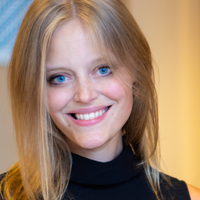
Emilie Caspar is an Associate Professor at Ghent University (Belgium), specializing in cognitive and social neuroscience. Her research primarily focuses on voluntary actions, sense of agency, responsibility, empathy, and moral decision-making. She leads research at the CO3 lab, which investigates the intersection of neuroscience, psychology, and social behavior.
Dr. Caspar completed her master's degree in neuropsychology and cognitive psychology, along with a certificate in forensic sciences and psychiatry. She earned her PhD in social and cognitive neurosciences from the Université libre de Bruxelles (Belgium) under the supervision of Axel Cleeremans. Following her PhD, she conducted postdoctoral research at University College London (UK) in Patrick Haggard's lab and later received a prestigious Marie-Curie Individual Fellowship for a 2-year postdoc at the Netherlands Institute for Neurosciences with Christian Keysers and Valeria Gazzola.
Her research investigates how obedience to authority changes individual cognition and moral behaviors, with a particular focus on the neuro-cognitive mechanisms that prevent individuals from complying with immoral orders. Dr. Caspar has pioneered innovative experimental approaches to study disobedience to authority that comply with modern ethical standards. Her work extends beyond traditional WEIRD (Western, Educated, Industrialized, Rich, Democratic) populations to include diverse groups such as inmates, military personnel, and survivors/perpetrators of genocide. This global perspective allows her to develop a more comprehensive understanding of the societal impact of obedience and moral decision-making.
Dr. Caspar employs a diverse methodological toolkit including behavioral experiments, EEG, ERPs, TFR, fMRI, robotics, and brain-computer interfaces to investigate questions related to free will, voluntary action, and the sense of agency. Her research spans multiple domains including forensic psychology, psychopathology, antisocial behaviors, moral consciousness, and applications in robotics and prosthetics.
Dr. Caspar has received notable recognition including a Marie-Curie Individual Fellowship, which supported her postdoctoral research at the Netherlands Institute for Neurosciences. Her work has been published in high-impact journals including Nature Communications, Scientific Reports, and PLOS ONE.
As a scientific consultant through Be Brain Consultancy, Dr. Caspar applies her expertise in behavioral neuroscience to humanitarian and societal projects focused on preventing blind obedience and promoting peace-building. She collaborates with NGOs and non-academic institutions to translate her research into practical applications. Her lab website (https://moralsocialbrain.com/) provides additional information about her research team and ongoing projects.