معرفی
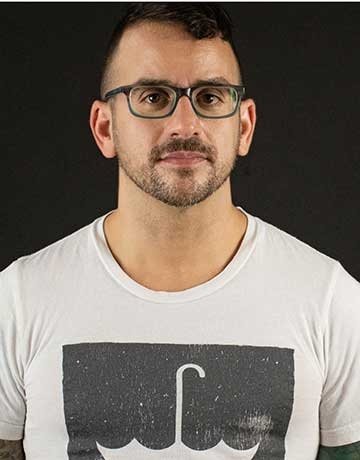
Elijah Adiv Edelman is an Associate Professor in the Department of Anthropology at Rhode Island College. His research takes an ethnographic and community-based approach to examining how transgender and gender non-conforming communities navigate politics of racialization, pathologization and recuperation. Dr. Edelman focuses on the personal, socio-political, legal, economic and health implications of gender transgression among transgender and LGBT communities of color both in the United States and globally.
Dr. Edelman's educational background includes:
- Ph.D. from The American University
- B.A. from University of North Carolina-Greensboro
His research interests center on transgender studies, particularly examining trans communities of color through the lens of racialization, spatial politics, and state regulation. Dr. Edelman extends non-traditional forms of academic work into the classroom, encouraging students to utilize mixed media in expression and research, including graphic novels, 'Zines,' and community map-making. His approach bridges academic scholarship with community activism, emphasizing accessible knowledge production.
Dr. Edelman's publications reveal consistent focus on transgender studies, with particular attention to trans communities of color, spatial politics, and intersections of gender, race, and sexuality. His 2021 book 'Trans Vitalities' introduces a framework for understanding trans coalitional labor and activism in Washington, DC, while his journal articles explore topics ranging from trans masculinity to necropolitical regulations of trans feminine bodies. His work spans academic journals, community-produced reports, and multimedia projects.
Dr. Edelman's academic work emphasizes community-centered research projects and radical cartography. He has been involved in significant community initiatives such as the Washington, DC Transgender Needs Assessment Survey. His teaching methodology challenges traditional academic modalities, creating spaces for students to engage with material through creative and critical lenses that center marginalized experiences and knowledge production.