معرفی
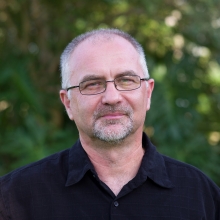
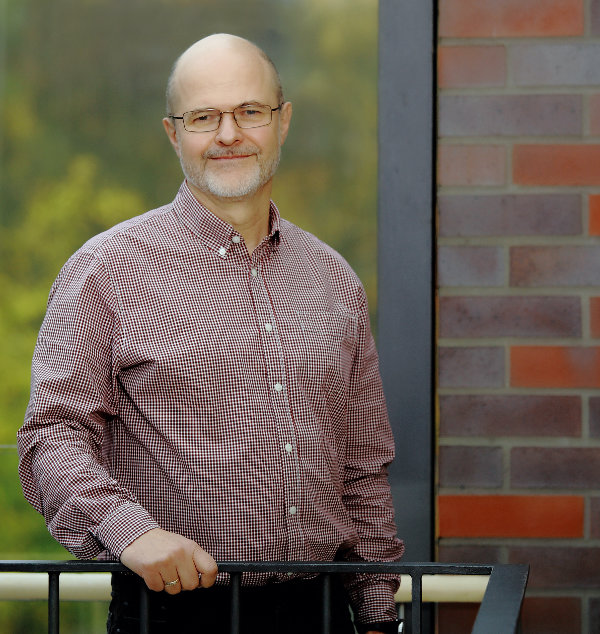
Professor Eckhard Schulz is a faculty member in the Faculty of Electrical Engineering at Schmalkalden University of Applied Sciences, where he focuses on the intersection of mathematics, physics, and biological systems. His office is located in House B, Room 0412, and he can be reached at +49 3683 688 5100.
Professor Schulz's research centers on the mathematical modeling of ion channels, with particular emphasis on understanding the thermodynamics and kinetics of channel gating mechanisms. His work explores subunit cooperativity in multimeric channels, equilibrium constants for receptors with multiple binding sites, and the application of Markov models to describe complex ion channel behavior. This research bridges physics, mathematics, and biology to unravel fundamental mechanisms underlying cellular electrical signaling.
His publication record spans nearly two decades, with consistent output in high-impact journals including PNAS, Nature Communications, and Journal of General Physiology. Recent work (2022-2023) continues his long-standing research focus while addressing increasingly complex models of ion channel behavior. His articles demonstrate sophisticated mathematical approaches to understanding biological phenomena, with particular attention to the thermodynamic profiles of receptor-channel systems.
Professor Schulz maintains active research collaborations, most notably with Klaus Benndorf and other researchers in the biophysics community. His work represents an important contribution to the field of computational biophysics, providing theoretical frameworks that help interpret experimental data on ion channel function. Students interested in mathematical biology or computational neuroscience would find valuable research opportunities in his group, working at the intersection of theoretical modeling and biological application.
His research has practical implications for understanding channelopathies and potentially developing more targeted pharmaceutical interventions that could modulate specific aspects of ion channel behavior, demonstrating the real-world impact of his theoretical work.