معرفی
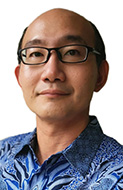
Ean Hin Ooi is an Associate Professor in the School of Engineering at Monash University Malaysia, where he leads the Computational Modelling team. He holds a PhD in Mechanical Engineering from Nanyang Technological University, Singapore, and a Bachelor's degree in Mechanical Engineering from the University of Technology, Malaysia. His research spans biomedical engineering, computational modeling, and numerical methods, with applications in cancer therapy and medical diagnostics.
- Doctor of Philosophy, Mechanical Engineering, Nanyang Technological University (NTU), 2009
- Bachelor's Degree, Mechanical Engineering, University of Technology, Malaysia
Dr. Ooi’s research focuses on the application of mathematical and computational modeling to understand biophysical phenomena in healthcare. His work targets improving cancer treatments such as thermal ablation (radiofrequency, cryoablation, photothermal), developing diagnostic tools like shear wave elastography for kidney disease, and advancing numerical techniques including meshless and boundary element methods. He is a pioneer in the radial basis integral equation method, contributing significantly to computational mechanics.
The recent publications reflect a strong trend in interdisciplinary research combining engineering, medicine, and materials science. Key themes include thermal therapy optimization, nanomedicine (gold nanorods, graphene), microfluidics, and machine learning integration in sensor systems. His modeling expertise extends from organ-level simulations (liver, kidney) to nanoscale heat transfer, demonstrating versatility across scales and applications.
Dr. Ooi serves as an Associate Editor for Computer Methods and Programs in Biomedicine and Journal of Mechanics in Medicine and Biology, highlighting his scholarly impact. He has received research funding for projects such as photothermal therapy for liver cancer and thermochemical ablation, indicating sustained grant support. He mentors students and is currently accepting PhD candidates in areas related to wound healing mechanics and computational prediction tools for thermal therapy.
He is actively involved in professional service, including participation in the Asia-Pacific Society for Artificial Organs and visiting researcher roles at institutions like the University of Nottingham Malaysia. His lab, the Computational Modelling team, focuses on developing predictive frameworks for medical interventions, aiming to bridge computational science with clinical applications.