معرفی
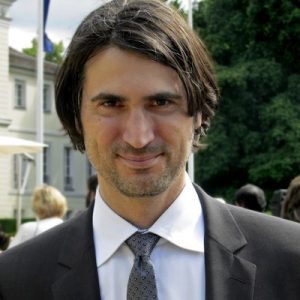
Douglas Moggach is an Adjunct Professor in the College of Humanities at Carleton University, affiliated with the Department of Greek and Roman Studies and the Religion program. He is also a Distinguished University Professor at the University of Ottawa and an Honorary Professor of Philosophy at the University of Sydney, reflecting his significant academic standing.
His educational background includes a B.A. from the University of Toronto and M.A. and Ph.D. from Princeton University. He has held visiting appointments at the Scuola Normale Superiore di Pisa, the University of Münster, Cambridge, Sydney, and Queen Mary University of London, underscoring his international academic engagement.
Moggach's research centers on German philosophy from Leibniz to Marx, with a focus on historical and systematic analysis. His key areas include German Idealism, the history of political thought (ancient and modern), aesthetics, and ethics. He is particularly renowned for his work on Bruno Bauer and the Hegelian school, exploring intersections between politics, religion, and art. His scholarship bridges continental philosophy and political theory, emphasizing republican ideals and modernity.
His recent publications reveal a sustained exploration of Hegelian debates, Romantic political theories, and the aesthetic-political nexus in 19th-century thought. Themes of freedom, perfection, and state theory recur across his work, reflecting a deep engagement with Enlightenment and post-Kantian philosophy.
- Canada Council Killam Research Fellowship (2007)
- Short-listed for the C.B. Macpherson Prize (2004)
Moggach has served on the editorial board of Hegel-Studien and is currently co-editing a volume on the Revolutions of 1848. His academic leadership includes editing major collections and publishing in multiple languages, indicating broad scholarly influence. While no direct mention of student supervision is made, his senior academic roles imply mentorship and collaboration.
He is actively involved in interdisciplinary research centers, including the Centre for Jewish Studies and the Carleton Centre for the Study of Islam, and contributes to digital humanities and medieval/early modern studies initiatives, reflecting a commitment to collaborative and public-facing scholarship.