معرفی
Donald Terndrup is an Associate Professor of Astronomy at The Ohio State University, specializing in observational astronomy with a focus on stellar populations, quasar winds, and galactic evolution. He joined the faculty in 1990 and has contributed extensively to studies of quasar outflows and their impact on galaxy formation. His research bridges stellar astrophysics and extragalactic phenomena, particularly examining angular momentum evolution in stars and the structure of the Galactic bulge.
Education: Ph.D. in Astronomy & Astrophysics from UC Santa Cruz (1986), A.B. in Physics and Astronomy from UC Berkeley (1981). He served as Program Director in the Division of Astronomical Sciences at the National Science Foundation (2008–2012), emphasizing his leadership in astronomical research policy. Courses taught include Astronomy 3350 (Methods of Astronomical Observation) and Astronomy 1221 (Astronomy Data Analysis).
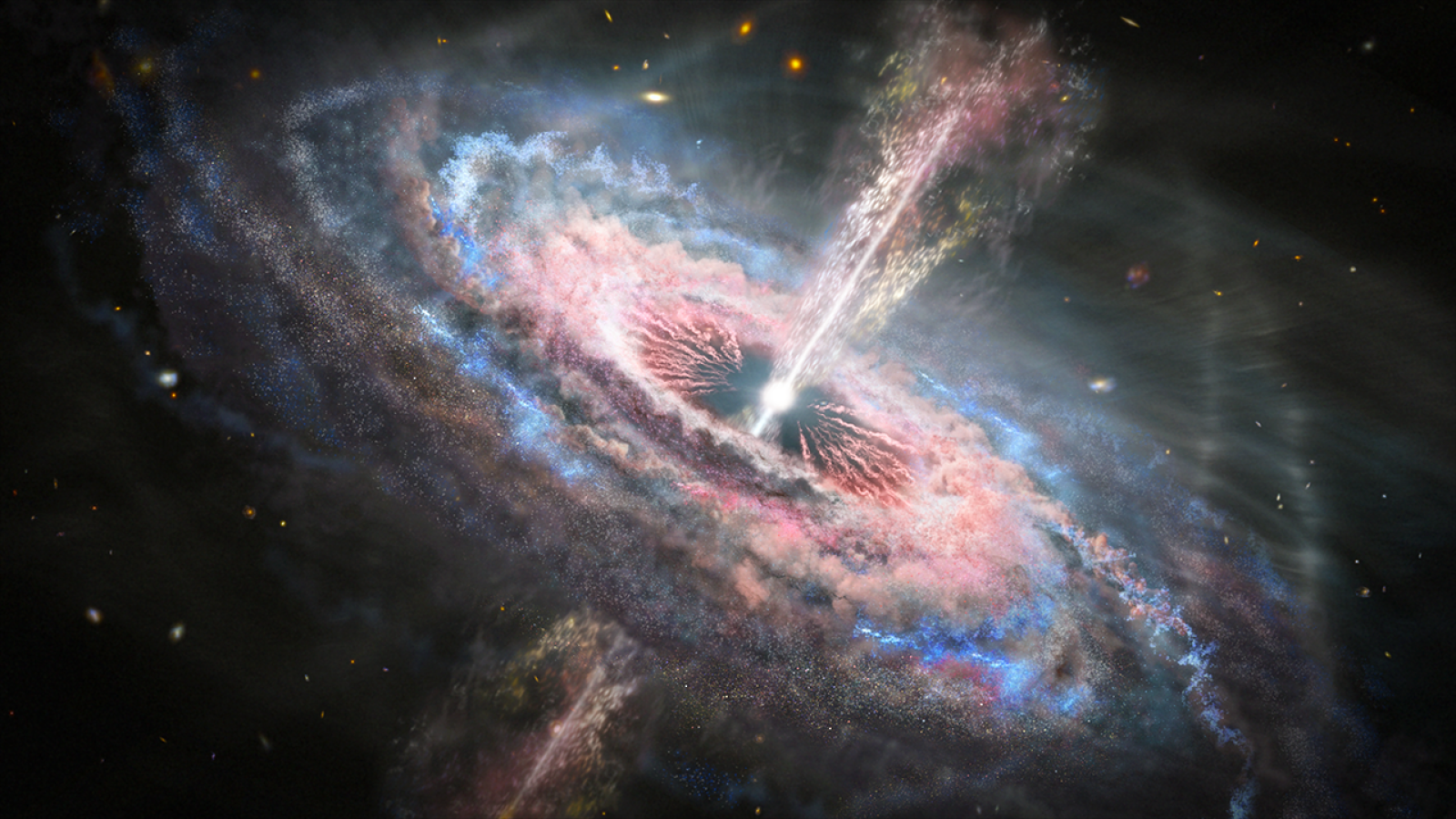
Research Interests: Terndrup’s work centers on quasar winds and feedback mechanisms, using multi-wavelength observations and spectral synthesis techniques. He investigates how outflows from active galactic nuclei influence galaxy evolution, with recent focus on iron low-ionization broad absorption-line (FeLoBAL) quasars. His studies employ advanced tools like SimBAL simulations to model outflow dynamics and energetics.
Articles Trends: His publications (2020–2024) emphasize quasar outflow physics, including geometric modeling, spectral variability analysis, and connections between accretion processes and radiation-driven winds. Collaborations span institutions worldwide, addressing topics like γ-ray novae and stellar rotation in the Kepler field.
Grants & Advising: Funded by NSF grants such as the Collaborative Research on BAL quasar spectral synthesis (2020). Advises graduate students on AGN feedback projects and undergraduate research through initiatives like 'Quasar Outflows for Undergraduates and Everyone.'
Labs/Teams: Active in collaborative projects such as the 4MOST-Gaia Quasar Survey and Dragonfly Galaxy studies, focusing on high-redshift galaxy mergers and radio jet interactions.