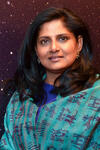
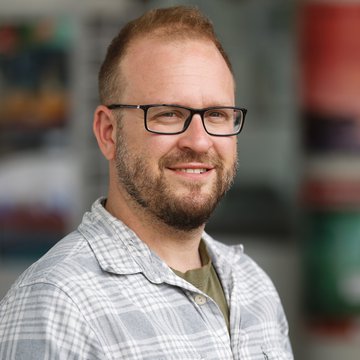
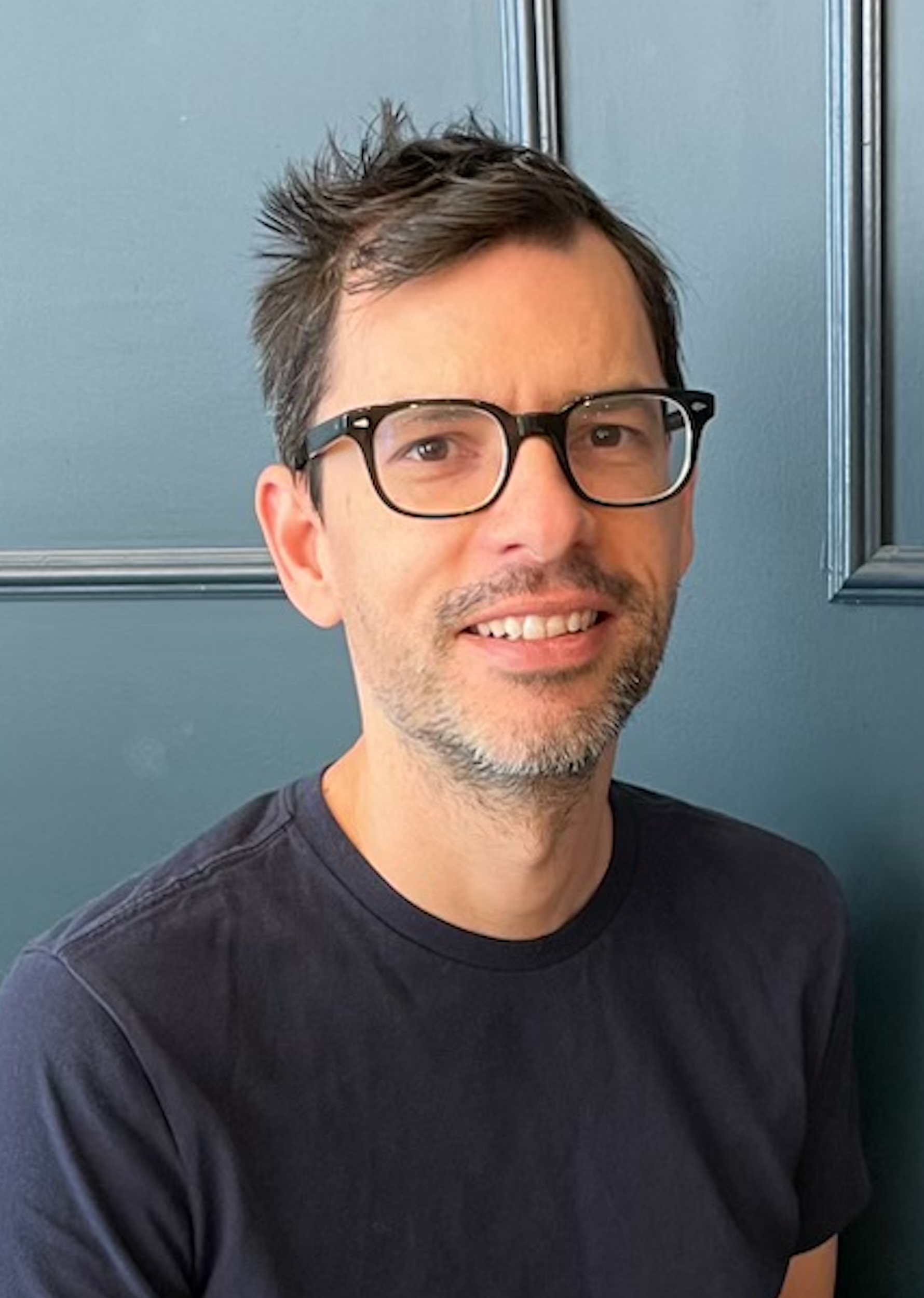
Laura Blecha is an Associate Professor in the Physics Department at the University of Florida, specializing in astrophysics. Her research focuses on supermassive black hole (SMBH) and galaxy evolution through numerical simulations and observational collaborations. PhD from Harvard University (2012) Full Member of NANOGrav pulsar timing collaboration Associate Member of the LISA Consortium Her work spans three primary areas: SMBH Formation & Evolution : Origins of SMBHs, galaxy merger-driven growth, and intermediate-mass black hole demographics AGN Fueling & Feedback : Hydrodynamic simulations of AGN activation mechanisms and observational bias in AGN detection Binary SMBH Dynamics : Gravitational wave recoil effects, three-body interactions, and pulsar timing array detection strategies Recent publications (2025) focus on dual AGN detection with Keck AO, JWST studies of primordial galaxies, and NANOGrav gravitational wave background analysis. Her group develops sub-grid models for SMBH dynamics in cosmological simulations and investigates signatures of black hole mergers in galaxy clusters. Laura's research combines computational methods (Illustris, BRAHMA simulations) with observational validation through: JWST NIRSpec spectroscopy Pulsar Timing Array analysis Multiwavelength imaging campaigns
Professor Andrew Newsam is a faculty member at Liverpool John Moores University's Astrophysics Research Institute (ARI), where he serves as Professor of Astronomy Education and Engagement since 2012. He has been instrumental in developing the National Schools' Observatory and astronomy distance learning courses, bridging observational astronomy with STEM education initiatives. Education: PhD in Astrophysics from University of Glasgow (1994), BSc in Physics with Computing from University of Warwick (1991) His research spans observational astronomy, high-energy astrophysics, and science education. Recent publications focus on nova remnants (RS Ophiuchi), gamma-ray bright novas (Nova Persei 2018, V392 Persei), microlensing surveys (Angstrom Project), and educational outreach. He has contributed to planetary eclipse studies and interstellar dynamics research. Key trends in his publications include: binary star systems (56% of works), transient phenomena (43%), and educational technology (35%). His citations show strong engagement with nova studies (22% of total citations) and microlensing research (19% of total citations). Scientific Awards: Teaching Fellowship Award for Individual Excellence (2009) Curriculum Innovation Award (2007) Queens Anniversary Prize for Higher and Further Education (2005) As chair of multiple education and outreach panels (2016-2025), he has shaped astronomy policy and public engagement strategies. He received STFC grants for STEM capacity building (2020) and BBSRC funding for citizen science projects (2019).
Priyamvada Natarajan is the Joseph S. and Sophia S. Fruton Professor of Astronomy and Professor of Physics at Yale University, serving as Chair of the Astronomy Department and Chair of the Women Faculty Forum. Her research focuses on cosmology, gravitational lensing, and black hole physics. She explores topics like dark matter distribution, supermassive black hole formation, and the interplay between galaxy evolution and AGN feedback. Natarajan has pioneered methods for mapping dark matter in galaxy clusters using gravitational lensing and has contributed to understanding cosmic structure formation through large-scale simulations. Education: Ph.D. in Astrophysics from Cambridge University (1998). Research interests include the nature of dark energy, galaxy formation, and the history and philosophy of science. She leads projects like DAVOS (Dwarf AGN variability studies) and QUOTAS, a platform for discovering supermassive black holes. Her recent work includes detecting overmassive black holes at high redshifts, analyzing gravitational-wave signals with NANOGrav, and utilizing JWST data to probe the cosmic dawn. Notable honors include the 2022 Liberty Science Center ‘Genius Award’. Natarajan’s collaborations span multi-messenger astronomy, leveraging gravitational lenses as cosmic telescopes. She advocates for gender equity in academia and has advised numerous observational and theoretical studies, though specific student names are not listed. Key projects involve the BUFFALO survey for cluster lens modeling and the ngEHT (next-generation Event Horizon Telescope) to study black hole environments. Her lab integrates cosmological simulations, observational data, and theoretical frameworks to address fundamental questions in astrophysics.
Dr. Sarah Burke-Spolaor is an Associate Professor in the Department of Physics and Astronomy at West Virginia University and a member of the Center for Gravitational Waves and Cosmology (GWAC) . Her research focuses on dynamic astrophysical phenomena , including binary supermass of mass black holes , pulsar timing arrays for gravitational wave detection , and Fast Radio Bursts (FRBs) . Key Research Areas : Gravitational wave detection via pulsar timing Observational studies of binary supermassive black holes Fast Radio Burst detection and classification Galaxy formation and merger dynamics Dr. Burke-Spolaor mentors a team of students and postdocs including Gregory Walsh, Jessica Sydnor, Reshma Thomas , and Kshitij Aggarwal , whose work includes projects like the BHBinary/Galaxy Evolution Survey and The Petabyte Project for Radio Transients . Her awards include the Alfred P. Sloan Fellowship and recognition as a CIFAR Azrieli Global Scholar . Selected Article Trends : Leading gravitational wave research through NANOGrav's 15-year data set Multi-messenger astronomy targeting binary black hole systems FRB host galaxy characterization across telescopes Exploring unconventional astrophysical transients in the Galactic bulge Advancing pulsar timing array methodologies Developing next-generation radio interferometry techniques Scientific Awards : Alfred P. Sloan Fellow CIFAR Azrieli Global Scholar
Dr. Noam Libeskind is a faculty member and group head of the Cosmography and Large-Scale Structure group at the Leibniz-Institut für Astrophysik Potsdam (AIP). He specializes in mapping the Universe's large-scale structure and using these maps to simulate the local environment. His work bridges observational and theoretical astrophysics, focusing on galaxy formation, the Local Group dynamics, and cosmographic reconstructions. He has held professorial positions, including at the Institute of Two Infinities (Université de Lyon-1) until 2021. Current projects include leading trans-national initiatives on cosmic web impacts (with Purple Mountain Observatory) and gravity tests via Local Group simulations (with Polish Academy of Sciences). Libeskind’s research interests include satellite galaxies, matter distribution reconstructions, and alignments of galaxies relative to their environments. His work has been featured in Scientific American and Sky & Telescope , highlighting contributions such as cosmography of the Local Universe and dark matter studies. Key collaborations span institutions like Hebrew University, Shanghai Astronomical Observatory, and Durham University. He leads projects like CLUES (Constrained Local UniversE Simulation) and HESTIA (High-resolution Environmental Simulations) to model the Local Universe. His team’s efforts have been recognized, including a 2024 municipal award for organizing impactful scientific meetings. Publications span cosmological simulations, galactic dynamics, and observational cosmology, with a focus on advancing understanding of the Milky Way, Andromeda, and their surrounding structures.
Elena D'Onghia is an Associate Professor in the Department of Astronomy at the University of Wisconsin-Madison. Her research focuses on unraveling the dynamical processes that shape the stellar structure of the Milky Way and nearby galaxies using analytical models and high-resolution numerical simulations. She leverages data from the GAIA satellite to study galactic evolution, emphasizing the importance of understanding our cosmic environment beyond the Solar System. University: University of Wisconsin-Madison Department: Astronomy Contact: edonghia@astro.wisc.edu | 4504 Sterling Hall Research Interests D'Onghia's work spans galactic dynamics, stellar structure formation, and interstellar medium processes. She investigates how gravitational interactions, stellar bars, and supernova-driven outflows influence galactic morphology. Her studies often integrate multi-wavelength observations with cosmological simulations to trace the evolution of galaxies like the Milky Way and Magellanic Cloud analogs. Recent Publications Her recent articles highlight galactic disk corrugations, starburst outflows in the LMC, and the role of classical bulges in shaping stellar bars. Collaborative projects include the Sloan Digital Sky Survey and ALMA-based studies of high-redshift galaxies. Scientific Awards 2018-2020 Vilas Associate Professor Research Fellow 2013-2017 Alfred P. Sloan Research Fellow 2013 Kavli Fellow Frontiers of Science 2009-2012 Keck Fellowship (Harvard) 2005-2006 Max-Planck Research Fellowship
Jo Bovy is a Professor and Canada Research Chair in Galactic Astrophysics at the University of Toronto's Department of Astronomy and Astrophysics. He specializes in galactic dynamics, dark matter, and the structural evolution of the Milky Way, leveraging large-scale surveys like Gaia and APOGEE. His research focuses on using kinematic and chemical data to trace galactic formation processes and dark matter distribution. Bovy is the lead developer of the galpy software library for galactic dynamics and co-authored a forthcoming textbook Dynamics and Astrophysics of Galaxies (Princeton UP, 2026). He has held leadership roles in the APOGEE survey and its successor APOGEE-2, advancing infrared spectroscopic studies of the Milky Way's bulge and disk. His accolades include the Sloan Fellowship (2016), Vera Rubin Prize (2019), and Steacie Prize (2024). Bovy advocates for open-source scientific software, with extensive contributions to projects like astroNN and pynbody. Education: Ph.D. 2011, New York University. Research emphasizes data-driven approaches, including machine learning for stellar age estimation and probabilistic density modeling. Active in international collaborations such as Euclid and SDSS-V. Currently exploring the implications of dark matter self-interactions on stellar streams and refining measurements of Galactic fundamental parameters through acceleration-based methods. Key contributions include modeling Galactic vertical motion dynamics, analyzing GD-1 stream disruptions via N-body simulations, and developing frameworks for chemodynamical tagging of dissolved star clusters. His work bridges theoretical modeling with observational data, fostering interdisciplinary advancements in astrophysical data analysis. Awards: Price Prize (2010) Rutherford Memorial Medal (2021) CAP Herzberg Medal (2025) Grants/Advising: Leads major survey initiatives and mentors researchers in computational astrophysics. Current projects include Euclid's Early Release Observations and Gaia Data Analysis.
Dr. Ben Montet is a Senior Lecturer in the School of Physics at the University of New South Wales (UNSW), where he leads the NEarby Worlds and Their Stars (NEWTS) research group. He joined UNSW in October 2019 and actively seeks to supervise students at undergraduate, Honours, and PhD levels in exoplanet and stellar astrophysics research. His education includes a PhD in Astrophysics from the California Institute of Technology (2016) and a BS in Physics and Astronomy from the University of Illinois at Urbana-Champaign (2011). Dr. Montet's research focuses on detecting and characterizing exoplanets around nearby stars and studying stellar magnetic activity phenomena like starspots and flares. He leverages data from space-based missions (Kepler, TESS) and ground-based facilities, employing machine learning techniques and statistical methods to analyze large datasets. His work spans exoplanet detection methods, stellar activity evolution, and the application of advanced computational tools to astrophysical problems. His recent publications demonstrate a strong focus on exoplanet characterization (including atmosphere studies, transit timing variations, and dynamical interactions), asteroseismology (determining stellar masses and evolutionary states), and stellar activity cycles. A significant portion utilizes data from the TESS mission. Dr. Montet is actively involved in student advising and encourages prospective students interested in exoplanets or stellar astrophysics to contact him. He leads the NEWTS research group at UNSW.
Professor Lee Jae-woo is a full Professor in the Department of Astronomy and Space Science at Sejong University, where he has served since 2003, advancing from Assistant Professor (2003-2006) to Associate Professor (2007-2012) and full Professor since 2013. His research centers on the formation and evolution of galaxies through detailed analysis of stellar populations in globular clusters using advanced optical and photometric techniques. His primary research focuses on multiple stellar populations in globular clusters, employing innovative photometric systems like Ca-CN-CH-NH to investigate chemical abundances, kinematics, and evolutionary pathways. Key areas include helium enhancement, metallicity variations, and dynamical properties in clusters such as 47 Tucanae, M22, and M92, with increasing utilization of JWST data for high-precision observations. His work bridges observational astronomy with theoretical models of galaxy formation. Analysis of his 15 most recent publications (2018-2025) reveals consistent focus on multi-population systems in globular clusters, with methodological evolution from ground-based photometry to space-based JWST observations. Dominant themes include population-specific chemical tagging, dynamical modeling of energy equipartition, and environmental effects on cluster evolution, significantly advancing galactic archaeology. His scientific excellence is recognized through prestigious awards: 2005 Group Achievement Award (NASA) 2006 16th Science and Technology Excellence Paper Award (Korea Federation of Science and Technology Societies) 2007 Top 50 Research Projects (National Research Foundation) 2010 Outstanding Paper Researcher Award (Sejong University) 2010 Ocean Science Award (Sejong University) 2010 National R&D Excellence Top 100 Achievements 2011 Scientist of the Month Award (Ministry of Education) 2013 Research Excellence Professor (Sejong University) Professor Lee actively supervises Master's and Doctoral students at Sejong University, guiding research in spectral synthesis modeling, photometric analysis of globular clusters, and cosmic distance measurement using RR Lyrae variables. His Stellar Species Research Lab conducts both observational campaigns and theoretical modeling, with recent projects focusing on JWST data analysis and innovative photometric system development. He leads the Stellar Species Research Lab, which operates Monday/Wednesday/Friday 2:00-5:00 PM, conducting observational studies on galactic formation through stellar photometry. Current projects include spectral synthesis for multi-population clusters, RR Lyrae variable analysis, and development of statistical models for population characterization, utilizing facilities like BOAO/KASINICS and JWST.
Rhythm Shimakawa is an Associate Professor at Waseda University's Center for Data Science and Institute for Advanced Study, with affiliations to the National Astronomical Observatory of Japan (Subaru Telescope). His career spans roles as a JSPS Overseas Fellow at UC Santa Cruz and NAOJ Fellow at Subaru Telescope. Education: Doctor of Philosophy (2017) from The Graduate University for Advanced Studies (School of Physical Sciences, Department of Astronomical Science), B.Sc. in Science (2012) from Osaka University. His research bridges galaxy formation/evolution, machine learning applications, and citizen science projects like GALAXY CRUISE. Key interests include protoclusters, superclusters, Lyα emitters, environmental effects on galaxies, and gas recycling in high-redshift systems. Recent publications (2024) focus on galaxy size-environment correlations, JWST observations of protocluster AGN activity, and discovery of z=4 quiescent galaxy concentrations. His team uses Subaru Hyper Suprime-Cam data for large-scale structure mapping and molecular gas studies in protoclusters. Scientific awards: SOKENDAI Research Award (2017), SOKENDAI Future Scientist Award (2015) Media coverage includes findings on supermassive black holes in protoclusters, galaxy void kinematics, and citizen-astronomy collaborations. He leads observational campaigns with ALMA, Keck/MOSFIRE, and HST data to study protocluster gas properties and galaxy morphologies.
Albert Zijlstra is Professor of Astrophysics at the University of Manchester's Department of Physics and Astronomy. He directs research on stellar evolution, planetary nebulae, and space dust using facilities like VLT and ALMA. Previously, he served as Director of Jodrell Bank Centre for Astrophysics (2010-2015). His research examines mass loss in evolved stars, circumstellar matter, and nearby galaxies through infrared/radio observations. Recent publications focus on nebula structures, stellar binaries, and chemical abundances. He maintains collaborations with international observatories and holds visiting positions at the University of Hong Kong.
Tania Barone is a Postdoctoral Research Associate at Swinburne University of Technology’s School of Science, Computing and Emerging Technologies, focusing on galaxy evolution and gravitational lensing. Her research explores quiescent galaxies, circumgalactic medium dynamics, and the application of lensing techniques to study high-redshift systems. She is available to supervise Doctorate (PhD) candidates. Education: - PhD in Astronomy, Australian National University, Canberra, Australia. Research Interests: Ms. Barone’s work centers on galaxy evolution mechanisms, particularly the interplay between galactic winds, outflows, and the circumgalactic medium. She uses gravitational lensing to study quiescent galaxies and their gas distribution, extending her research to cosmic noon (z=1) and beyond. Her studies integrate observational data from telescopes like Keck, Hubble, and the Very Large Telescope to probe galaxy structure and mass distribution. Professional Activities: - Organized the JWST MasterClass 2024 and ASTRO3D 2022 Science Meeting. - Committee member of Swinburne’s Keck Time Allocation and PhD Admissions Panels. - Referee for journals including The Astrophysical Journal , Monthly Notices of the Royal Astronomical Society , and Astronomy & Astrophysics . Advising & Grants: - Supervised two PhD candidates: “Using gravitational lenses to map the diffuse gas around galaxies” (2025) “Galaxies and Their Circumgalactic Medium” (2022) - Collaborates on the ASTRO3D Centre of Excellence and the AGEL (Galaxy Evolution with Lenses) survey. Labs/Teams: Active contributor to the AGEL survey team and ASTRO3D, leveraging large-scale lensing systems to study galaxy evolution at high redshifts.
Jochen Liske is a Professor of Observational Astronomy at the University of Hamburg , affiliated with the Hamburger Sternwarte (Hamburg Observatory) and the Quantum Universe Cluster of Excellence . He leads the Observational Astronomy Research Group and contributes to major international collaborations like GAMA , WAVES , and 4MOST . Research Focus: Extragalactic astronomy, observational cosmology, galaxy evolution, dark energy, and real-time cosmology via redshift drift measurements. Instrumentation: Key roles in the 4MOST and ELT-ANDES spectrograph projects, including calibration and software development. Outreach: Creator of the Hubblecast and ESOcast video podcasts, presenter of documentaries like "Eyes on the Skies" and "The Eye 3D" , and frequent public speaker. His recent publications span galaxy surveys, gravitational wave detection methods, and instrumentation design. Notable awards include the MEDEA Special Jury Award 2009 for science communication and an ESO Fellowship . He teaches astrophysics courses and mentors students through projects like the Quantum Universe Cluster.
Dr. Francesca Fragkoudi is an Associate Professor in the Department of Physics at Durham University and holds an Assistant Professor appointment at the Institute for Computational Cosmology. Her research focuses on galactic structure formation, computational cosmology, and stellar dynamics. Position: Associate Professor in Physics Affiliated with: Institute for Computational Cosmology Her research explores the formation of galactic bars and boxy/peanut bulges, secular evolution mechanisms, and the chemodynamical structure of the Milky Way through observational and cosmological simulation analyses. Recent work examines bar-induced gas inflows, dark matter wakes, and the impact of mergers on disc evolution. Publications highlight trends in cosmological simulations (Auriga Project), Milky Way studies (nuclear disc kinematics, bulge origins), and observational analyses (JWST bar fractions, Gaia data). She employs multi-wavelength data and N-body/hydrodynamic modeling to investigate galactic components. Dr. Fragkoudi supervises PhD students Diego Dado, Martyna Winiarska, and Thomas Tomlinson. Her affiliations include the Institute for Computational Cosmology, a research center specializing in simulations of galaxy formation and dark matter distribution.
Kenji Bekki is a Professor at the University of Western Australia (UWA) and a member of the International Centre for Radio Astronomy Research (ICRAR). Over 25 years, he has specialized in galaxy and star cluster formation using computational models. His work bridges theoretical astrophysics with observational projects, notably applying AI technologies to astronomical data through initiatives like the AIverse project. He collaborates with robotics companies to integrate AI and robotics into astronomy education and research, and has created galaxy animations for TV shows such as NHK's Cosmic Front. His research spans three core areas: AI-driven astrophysical problem-solving, supercomputer simulations of galaxies and star clusters, and providing theoretical predictions for observational projects. Current projects include the AIverse project (analyzing dark matter and stellar kinematics via deep learning), star-by-star globular cluster formation simulations (using OzSTAR), and involvement in international observational collaborations. He has supervised over 20 years of students across disciplines like astronomy, computer science, and engineering. Key achievements include 130 first-author publications, leadership in ARC-funded grants (e.g., AI-based galaxy physics, robotics integration), and awards like the ARC Future Fellowship (2010). His work contributes to UN SDG 9 (Industry, Innovation & Infrastructure) through technological advancements in astronomy. Awards: ARC Future Fellow (2010), Japan Shinko-zaidan Award (1999), JSPS Fellowship (1996). Grants: Includes ARC projects on AI in galaxy physics (2020–24), ultra-diffuse galaxies (2022–24), and robotics integration (2019). Teaching: Postgraduate galactic dynamics courses for over a decade. His lab focuses on interdisciplinary projects at the intersection of astronomy, AI, and robotics, fostering collaborations with global institutions and industries.