معرفی
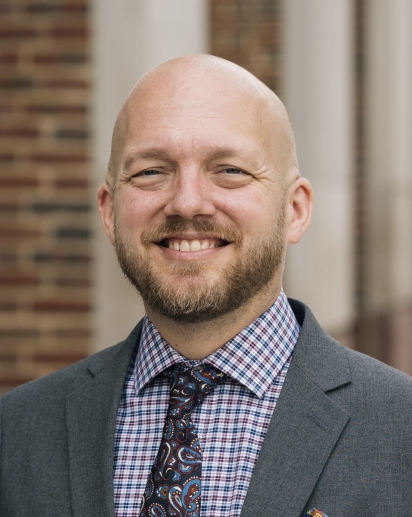
Don Compton is a Professor of Psychology and Professor of Curriculum and Instruction at Florida State University (FSU), and Director Emeritus of the Florida Center for Reading Research (FCRR). He holds dual appointments in the College of Education and the Department of Psychology. Previously, he served as Chair of Special Education and a Kennedy Center Investigator at Vanderbilt University. Compton earned his Ph.D. in Learning Disabilities from Northwestern University. His research focuses on modeling individual differences in reading development, identifying and treating reading disabilities, and advancing evidence-based interventions.
Education:
- Ph.D. in Learning Disabilities, Northwestern University (1993)
- M.S. in Chemical Engineering, Northwestern University (1986)
- B.S. in Chemical Engineering, University of Michigan (1983)
Research Interests:
Compton’s work explores the cognitive and academic profiles of reading disabilities, the efficacy of RTI (Response to Intervention) frameworks, and the role of orthographic learning in reading development. He investigates dynamic assessment techniques to identify at-risk learners and designs interventions targeting decoding, comprehension, and vocabulary acquisition. His research also addresses late-emerging reading difficulties and the intersection of reading and mathematics disabilities.
Key Contributions:
Compton has authored over 80 peer-reviewed articles and book chapters. Notable contributions include the Albert Harris Research Award (2015) for his work on RTI prevention models and his role as an AERA Fellow (2016). He has led large-scale studies on screening tools, intervention efficacy, and the neurobiological underpinnings of reading.
Professional Roles:
- Associate Director, FCRR
- Editorial Board Member, Journal of Learning Disabilities
- Principal Investigator on NIH and IES grants
Labs/Teams:
Compton leads research at the FCRR, focusing on translational studies to bridge theory and practice in reading education. His team collaborates with educators to develop scalable interventions and screening tools for early identification of reading challenges.