معرفی
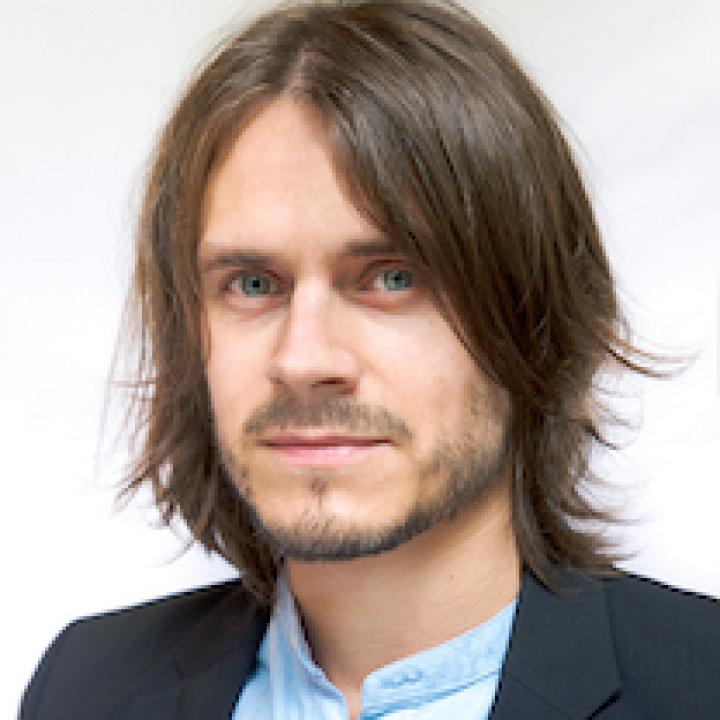
Dominique Makowski is an Assistant Professor in Psychology at the School of Psychology, University of Sussex, where he leads the Reality Bending Lab (ReBeL) and teaches advanced courses in Bayesian statistics and psychophysiology. He has previously held research positions at Nanyang Technological University in Singapore, including as a Presidential Research Fellow.
Education:
- PhD in Psychology, Université de Paris (2014–2018)
- MSc in Clinical Neuropsychology, Université de Paris (2012–2014)
- BSc in Psychology, Université de Paris (2009–2012)
His research focuses on the neuropsychology of reality perception, including deception, fake news, visual illusions, and altered states of consciousness. He also investigates the role of the body and emotions in cognition, particularly interoception and emotion regulation, and is deeply committed to methodological innovation. He develops open-source software tools such as easystats, NeuroKit, Pyllusion, and Neuropsydia to enhance accessibility and reproducibility in psychological science.
His recent publications reflect a strong trend in methodological development, neurophysiological signal processing, and the cognitive neuroscience of belief and perception. These works integrate Bayesian statistics, open science practices, and computational modeling to advance both theory and application in psychology.
Scientific Awards:
- School of Psychology Award Winner 2024: Outstanding Student Supervision
- SIPS Commendation (2024): for NeuroKit
- University of Sussex Research Culture Awards Winner 2024: for engagement in Open Science
- SIPS Mission Award (2023): for easystats
- SIPS Commendation (2021): for BayestestR
- Best Article Award (Psychonomic Society, 2020): for main PhD paper
Dr. Makowski has supervised numerous research assistants and students, particularly during his postdoctoral and faculty roles, and has secured research funding (e.g., $200k during his Presidential Fellowship). He has delivered workshops on psychophysiological methods, Bayesian statistics, and programming at institutions including the University of Basel, University of Zurich, and NTU Singapore.
He leads the Reality Bending Lab (ReBeL), which integrates neuroscience, psychology, and computational methods to study how humans perceive and interpret reality. The lab emphasizes open science, reproducibility, and interdisciplinary collaboration.
حوزههای پژوهشی