معرفی
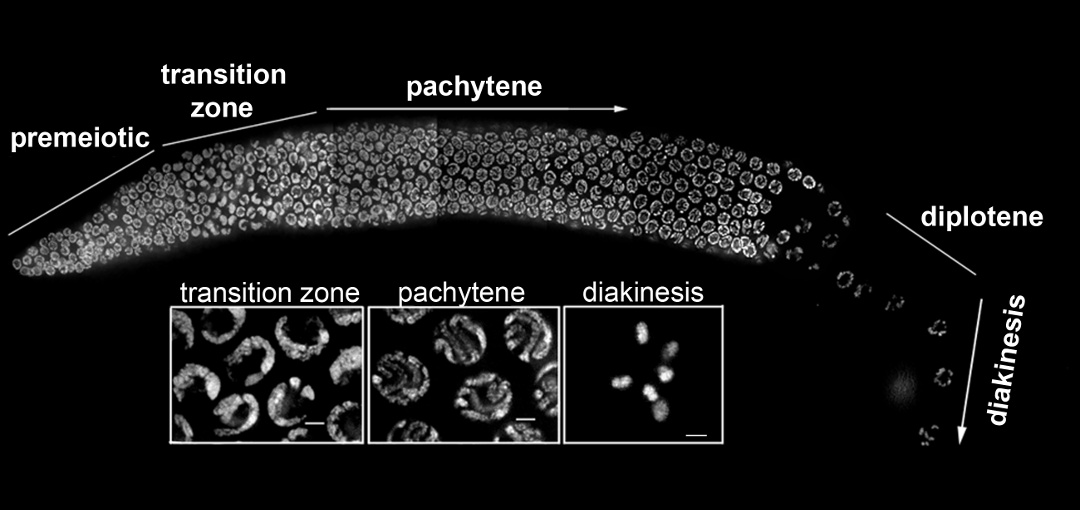
Diana Libuda is an Associate Professor in the Department of Biology at the University of Oregon, affiliated with the College of Arts and Sciences. Her research focuses on molecular mechanisms underlying meiosis, particularly DNA repair, recombination, and chromosome dynamics in Caenorhabditis elegans. She leads the Libuda Lab (www.libudalab.org), where her team investigates gametogenesis and the genetic basis of fertility.
Key research areas include: (1) Regulation of meiotic recombination by synaptonemal complex proteins, (2) Role of BRCA1/BRC-1 and SMC-5/6 in DNA repair pathway choice, and (3) Mechanisms of nuclear migration through constricted spaces during development. Her work bridges genetics, cell biology, and genomics to understand fundamental processes in reproduction and genome stability.
Dr. Libuda has pioneered techniques like auxin-dependent protein depletion for live imaging in C. elegans, enabling real-time observation of meiotic processes. Her lab also developed quantitative image analysis tools for germline studies. Notable achievements include identification of transposable element roles in structural variation and discovery of CDC-42-driven actin networks in nuclear positioning.
Recipient of the 2018 PLOS Genetics Research Prize for her work on spindle assembly during meiosis. Active in interdisciplinary research collaborations, particularly with Stanford University School of Medicine. Office located at 375E Streisinger Hall, with contact details available via email dlibuda@uoregon.edu.