معرفی
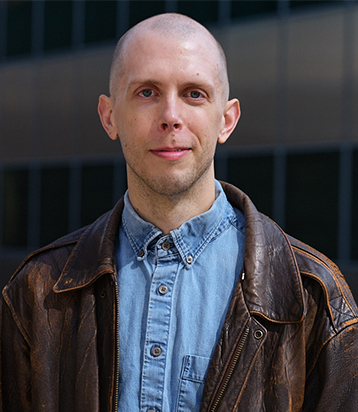
Derek Ruez is an Academy Research Fellow in Administrative Studies at the Faculty of Management and Business, Tampere University. He serves as Editor-in-chief of Space and Polity journal and Chair of the Tampere University Association of Researchers and Teachers (Tatte) ry. His work is associated with the Space and Political Agency Research Group.
Dr. Ruez works at the intersections of urban, political and cultural geographies, with research focusing on the politics of migration, queer spaces and communities, and the affective politics of encounter and critique in academic work and everyday life. His scholarship demonstrates deep engagement with critical human geography, affect theory, political philosophy, and Deleuzian thought. His work often examines ambivalence as a theoretical and methodological approach to understanding complex social phenomena.
Analysis of Dr. Ruez's publications reveals a consistent trajectory exploring affective dimensions of political life, with recent work expanding into compassionate cities, LGBTQI+ activism, and critical approaches to post-foundational political theory. His scholarship shows strong interdisciplinary connections between geography, political theory, and cultural studies, with notable contributions to understanding how emotions and affects shape political encounters and urban governance.
As Editor-in-chief of Space and Polity, Dr. Ruez plays a significant role in shaping geographical scholarship. His editorial work demonstrates commitment to innovative theoretical approaches and critical perspectives in human geography.
Dr. Ruez's research demonstrates sustained engagement with critical methodologies, particularly around ambivalent approaches to geographical difference and feeling-knowing. His work on urban governance, particularly regarding compassionate cities and LGBTQI+ activism, shows practical application of theoretical frameworks to contemporary urban issues.
His research is coordinated through the Space and Political Agency Research Group at Tampere University, where he contributes to developing critical geographical perspectives on contemporary political challenges.