معرفی
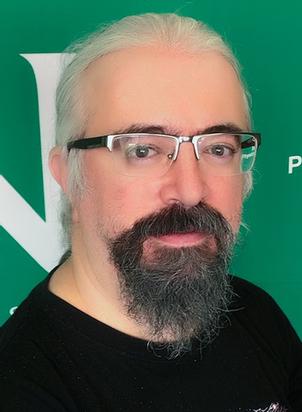
Deniz Cakir is an Associate Professor in the Department of Physics & Astrophysics at the University of North Dakota, holding this position since 2022 after serving as Assistant Professor from 2016-2022. His academic journey includes postdoctoral research at the University of Twente (Netherlands) and University of Antwerp (Belgium), plus a visiting appointment at Okinawa Institute of Science and Technology (Japan).
His educational foundation comprises a B.Sc. in Physics from Middle East Technical University (Turkey, 2008), and M.Sc. (2003) and Ph.D. (2008) in Physics from Bilkent University (Turkey), where his doctoral work centered on TiO2 nanostructures for dye-sensitized solar cells and photocatalysis.
- B.Sc. Physics, Middle East Technical University (2008)
- M.Sc. Physics, Bilkent University (2003)
- Ph.D. Physics, Bilkent University (2008)
Prof. Cakir specializes in computational materials science using density functional theory (DFT) to investigate two-dimensional materials—including MXenes, transition metal dichalcogenides, graphene, and black phosphorus—for next-generation energy storage and spintronic applications. His expertise spans electronic, optical, thermal, piezoelectric, and thermoelectric property analysis via ab-initio methods (VASP, SIESTA, NWCHEM), with growing integration of machine learning for materials discovery.
Analysis of his 15 most recent publications (2019-2021) reveals dominant focus on MXenes and 2D heterostructures for multivalent-ion batteries (Li, Na, Mg), where he engineers functionalization and strain to enhance storage capacity and ion kinetics. Significant work also addresses piezoelectric responses in novel 2D materials and magnetic property modulation in double-transition metal MXenes for spintronics, demonstrating consistent application of first-principles modeling to solve materials challenges.
While the source text does not specify awards, students, or grants, Prof. Cakir leads an active computational research group at UND building on his European project experience in hydrogen storage and organic electronics. His teaching portfolio includes graduate courses in Quantum Mechanics, Solid State Physics, and specialized topics in computational physics.