معرفی
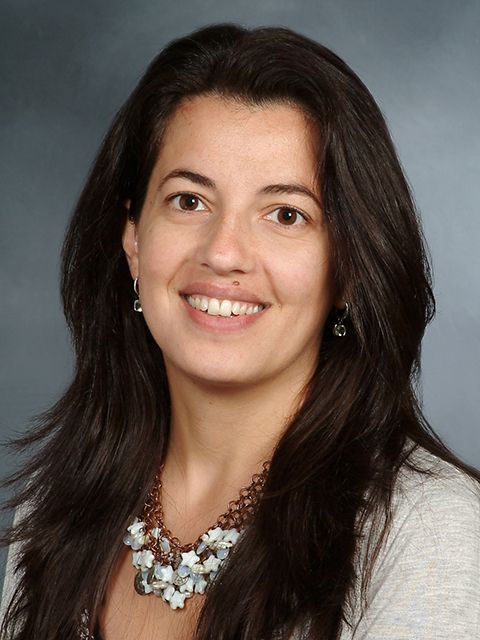
Dr. Denise Hemmings is an Associate Professor in the Department of Obstetrics & Gynaecology at the University of Alberta's Faculty of Medicine & Dentistry, with a cross-appointment in Medical Microbiology and Immunology (MMI). Her research focuses on understanding vascular functions during pregnancy and the impact of cytomegalovirus (CMV) infections on metabolic and vascular dysfunction in aging and breast cancer.
Dr. Hemmings obtained her PhD in Medical Microbiology and Immunology (MMI) in 2001 with Dr. Larry Guilbert and completed a post-doctoral fellowship with Dr. Sandra Davidge at the University of Alberta. Her educational background has provided a strong foundation for her interdisciplinary research at the intersection of virology, immunology, and reproductive medicine.
Dr. Hemmings' research program primarily investigates the dual vascular functions of sphingosine 1-phosphate (S1P), a bioactive lipid, specifically permeability and vascular tone and their inter-regulation during pregnancy. Her laboratory is particularly interested in how S1P-mediated vascular adaptations can be disrupted by factors such as cytomegalovirus (CMV) infection and elevated proinflammatory cytokines, leading to pregnancy complications like preeclampsia and intrauterine growth restriction. Additionally, her lab explores the impact of chronic CMV infections on metabolic and vascular dysfunction in aging and breast cancer. The research employs a range of techniques from molecular biology to physiological models to understand these complex interactions.
Analysis of Dr. Hemmings' recent publications reveals a strong focus on lipid signaling pathways in pregnancy complications, particularly involving sphingolipids like sphingosine 1-phosphate and lysophosphatidate. Her work demonstrates how viral infections, especially CMV, interact with these lipid signaling pathways to influence breast cancer progression and pregnancy outcomes. There is a clear progression in her research from basic mechanisms of vascular function to translational applications in understanding disease pathologies.
Dr. Hemmings has received several notable recognitions for her work:
- CIHR New Investigator award in 2010
- Former Chair of Women in Scholarship, Engineering, Science and Technology (WISEST)
Dr. Hemmings is actively involved in mentoring and education, having trained more than 60 students from junior high school to post-doctoral fellow levels since her appointment in 2005. She serves as the Graduate Program Coordinator and Reproductive Sciences Division Director, where she encourages interdisciplinary collaboration between basic scientists, clinicians, and epidemiologists. Her research is supported by significant funding from the Canadian Institutes of Health Research (CIHR), the Women and Children's Health Research Institute, and the Canadian Breast Cancer Foundation, reflecting the importance and impact of her work in reproductive health and cancer research.
Through her leadership in the Hemmings laboratory, she has built a research team focused on understanding the complex interactions between viral infections, lipid signaling, and vascular function in pregnancy and cancer. Her lab maintains strong connections with clinical researchers and continues to forge interdisciplinary links to advance knowledge in reproductive sciences and women's health.