معرفی
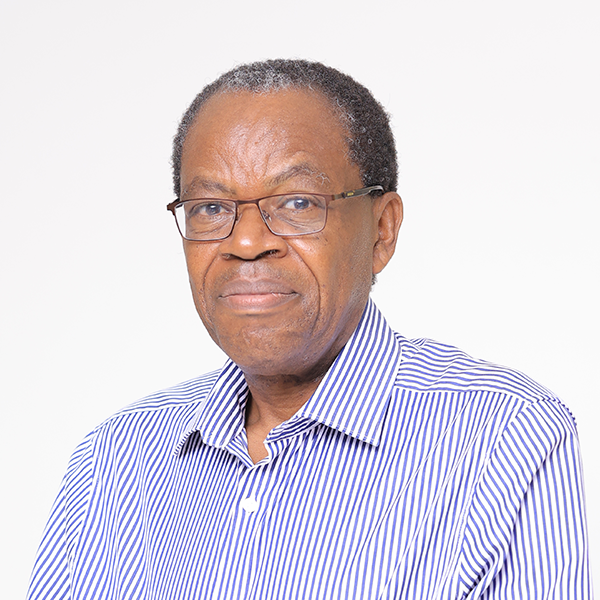
Professor David Yawe Guwatudde is a distinguished Professor of Epidemiology and Biostatistics at the School of Public Health, Makerere University in Kampala, Uganda. With extensive experience in academic leadership, he previously coordinated the Master of Public Health Distance Education program and the Master of Biostatistics program, and chaired the Department of Epidemiology and Biostatistics from 2005 to 2009. His work bridges academic research with practical public health applications across sub-Saharan Africa.
Professor Guwatudde's research expertise spans the epidemiology of high-burden diseases in Uganda and the sub-Saharan African region, with particular focus on non-communicable diseases (including diabetes and hypertension), tuberculosis, and nutritional morbidities in HIV. His work has evolved to include evaluating the effectiveness of health interventions and characterizing NCD risk factors through nationally representative surveys. His recent publications demonstrate a strong emphasis on adolescent health, nutrition literacy, and multi-country implementation research across Africa.
His current research portfolio includes leadership as Uganda site Principal Investigator on two major multi-country projects: the ARISE-NUTRINT initiative examining nutrition-related non-communicable diseases in adolescence, and the DASH research network for adolescent health interventions in Sub-Saharan Africa. Both projects involve collaboration across six SSA countries, European institutions, and Harvard T.H. Chan School of Public Health.
Professor Guwatudde has mentored numerous students and trainees at Makerere University who have gone on to successful careers globally. His research has been supported through significant grants including countrywide NCD Risk Factor surveys conducted in partnership with Uganda's Ministry of Health. His work has directly informed national policy and monitoring frameworks for non-communicable diseases in Uganda.
With over 145 publications in international peer-reviewed journals, his scholarly output reflects deep engagement with both methodological epidemiology and practical public health challenges in resource-limited settings. His recent work demonstrates increasing focus on implementation science approaches to address the growing burden of non-communicable diseases in African contexts.