معرفی
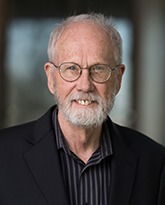
Dr. David Patterson serves as a Professor in the Department of Biology at the University of North Georgia, teaching core courses including Ecology (BIOL 3500K), Evolutionary Biology (BIOL 4450), and Senior Seminar (BIOL 4700). His office is situated in the Health and Natural Sciences building (Room 428) on the Dahlonega campus, with contact details including email david.patterson@ung.edu and phone 706-864-1741.
His research centers on ecosystem change and mammalian evolution across geological timescales, employing paleontological analyses, stable isotope geochemistry, and ecometrics. Field and laboratory projects focus on North American and African mammals from the early Pleistocene to contemporary periods, investigating how environmental shifts drive evolutionary processes through interdisciplinary methodologies that integrate fossil records with geochemical data.
Analysis of Dr. Patterson's publication record (2017-2022) reveals consistent focus on paleoanthropology and Pleistocene ecosystem dynamics, particularly examining hominin evolution through stable isotope analysis of fossil remains. His work demonstrates methodological innovation in multiproxy environmental reconstruction and contributes significantly to understanding vegetation-climate interactions in extinction events and adaptive radiations.
Dr. Patterson has not listed any scientific awards in the provided institutional information.
He advises Biology and Pre-Physician's Assistant students while directing the Study of Community and Landscape Evolution (SCALE) Lab at UNG. His active research program involves fieldwork across multiple continents and laboratory analyses, though specific grant funding details are not disclosed in the source material. The SCALE Lab serves as the operational hub for his paleontological investigations.
The SCALE Lab conducts integrated field-laboratory research on landscape evolution and its biological consequences, utilizing stable isotope techniques to reconstruct paleoenvironments. Current projects examine mammalian responses to Pleistocene climate fluctuations in Africa and North America, with emphasis on ecological community assembly and extinction dynamics through geochemical analysis of fossil specimens.