معرفی
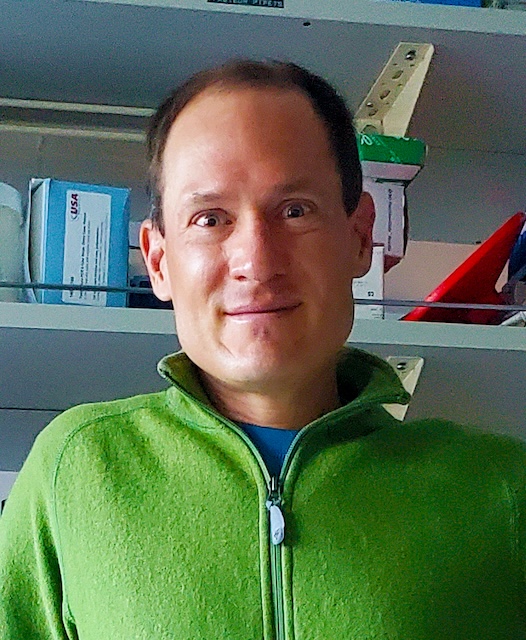
David Jonah Grunwald, Ph.D. is a Professor in the Department of Human Genetics at the University of Utah School of Medicine. His laboratory conducts research using zebrafish, mice, and human models to investigate fundamental mechanisms of tissue development, maintenance, and disease. With a career spanning several decades, Dr. Grunwald has established himself as a leading researcher in developmental genetics and genome editing techniques.
Dr. Grunwald's research focuses on four primary themes: (1) molecular and genetic pathways regulating stem cell maintenance and differentiation, particularly examining how promoter proximal transcription pausing maintains multipotent precursor cells; (2) regulation of intracellular calcium mobilization in tissue development; (3) optimization of genome modification strategies in zebrafish to advance gene function studies; and (4) identification of pathways essential for joint homeostasis whose perturbation leads to osteoarthritis. His work bridges basic developmental mechanisms with translational applications in human disease.
Analysis of Dr. Grunwald's recent publications reveals an evolving research trajectory from foundational zebrafish developmental studies to sophisticated genome editing techniques and disease mechanism investigations. His work demonstrates consistent focus on transcriptional regulation, calcium signaling, and stem cell biology, with increasing emphasis on osteoarthritis mechanisms in recent years. The publications show strong collaboration networks, particularly with Kazuyuki Hoshijima and Michael Jurynec, and demonstrate methodological progression from traditional mutagenesis to CRISPR-based approaches.
Dr. Grunwald maintains an active research laboratory with multiple ongoing projects. His team includes senior research associates, undergraduate students, and likely graduate students and postdoctoral fellows, though specific trainee names aren't listed in the provided text. The laboratory appears well-supported by research grants enabling continued investigation into developmental mechanisms and disease models.
The laboratory environment focuses on zebrafish as a primary model organism, with complementary work in mouse and human systems. Dr. Grunwald's team employs advanced techniques including CRISPR-Cas9 genome editing, calcium imaging, and molecular analysis of developmental pathways. The research has significant implications for understanding stem cell biology, tissue development, and osteoarthritis pathogenesis.