معرفی
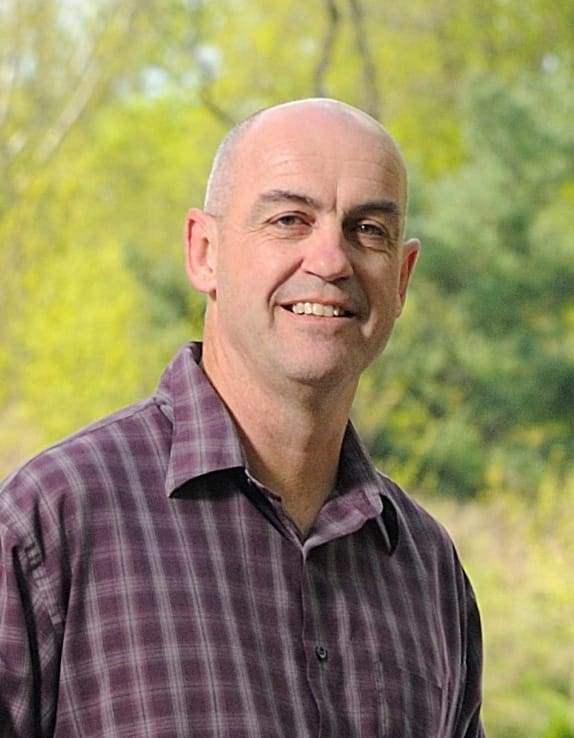
Professor Darryn Waugh is a leading academic at Johns Hopkins University's Department of Earth and Planetary Sciences. His research focuses on large-scale dynamics and transport in the atmosphere and oceans, addressing global environmental challenges such as stratospheric ozone depletion, climate change, and urban heat. He has expanded his work to include planetary atmospheres (e.g., Mars and Titan) and air quality, collaborating with initiatives like the Baltimore Social-Environmental Collaborative (BSEC) for equitable climate adaptation.
Education:
- Ph.D. in Applied Mathematics, University of Cambridge, 1991
- M.Sc. in Mathematics, University of Waikato, 1987
- B.Sc. in Mathematics & Physics, University of Waikato, 1985
Research Interests:
Waugh's work spans stratospheric and oceanic dynamics, planetary atmospheres, and urban environmental science. Recent projects include investigating the Southern Ocean's ventilation patterns, the impact of climate change on jet streams, and mitigating heat exposure in urban areas like Baltimore. His research integrates observational data, numerical models, and interdisciplinary collaborations.
Recent Article Trends:
Recent publications emphasize planetary polar vortices, ocean carbon dynamics, and urban climate adaptation. A key focus is linking atmospheric processes (e.g., stratospheric circulation) to surface climate impacts, with applications to environmental policy and public health.
Awards and Recognition:
- NASA Group Achievement Awards (2001, 1998, 1995)
- AGU Editors Citations for Excellence in Refereeing (1999, 1995)
- U.K. Commonwealth Scholarship (1989–1991)
Advising and Grants:
- Has advised over 20 graduate students, many now leading roles in academia and government agencies (e.g., NASA, NOAA).
- Recipient of grants from NASA, the National Science Foundation, and collaborative initiatives like the BSEC.
Labs and Teams:
Leads the Waugh Research Group, which operates the Baltimore Community Weather Network to monitor urban heat and air quality. Collaborates internationally on projects like the Chemistry-Climate Model Initiative (CCMI).