معرفی
Dr Daniel Hending is a Research Fellow at the University of Oxford's Nature-based Solutions Initiative, where he leads ecological research for the Flourishing Landscapes Programme (FLP). The FLP addresses the interconnected challenges of livelihoods, climate change, and biodiversity loss in tropical forest frontiers, with active field research in Ghana's cacao agroecosystems (Guinean Forests of West Africa) and Vietnam's coffee landscapes (Indo-Burma hotspot).
Research Focus
His interdisciplinary research spans animal behaviour, conservation ecology, environmental science, and evolutionary biology, with specialized expertise in:
- Organismal responses to habitat fragmentation, agricultural expansion, and climate change
- Bioacoustic monitoring and remote sensing for ecosystem-level biodiversity assessment
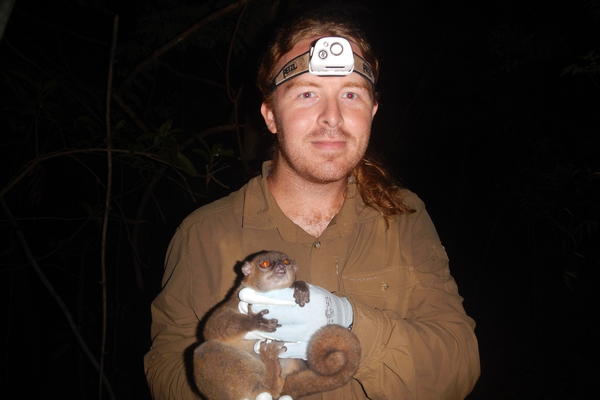
- Primate ecology and conservation in Madagascar's degraded landscapes
Professional Engagement
Beyond research, Dr Hending serves as Associate Editor for multiple scientific journals and holds key roles in conservation organizations:
- Participating member of IUCN SSC Primate Specialist Group (Madagascar Section)
- National Geographic Explorer
- Member of British Ecological Society, Society for Experimental Biology, and UK Bioacoustics Special Interest Group
Publication Trends
Recent articles (2024-2025) demonstrate three dominant themes:
- Bioacoustic innovations: Development of passive acoustic monitoring techniques for global biodiversity assessment across terrestrial and aquatic realms
- Lemur conservation ecology: Impacts of forest fragmentation on nocturnal primate populations, health, and behavior in Madagascar
- Methodological frameworks: Tools for morphological analysis, cryptic species identification, and integrated biodiversity monitoring combining citizen science with satellite data
Honors
- National Geographic Explorer recognition for field research contributions
Program Leadership
Directs ecological research components of the Flourishing Landscapes Programme, coordinating field studies across two continents to develop nature-based solutions for agricultural-forest ecosystems.