معرفی
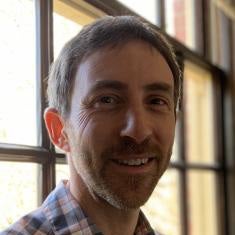
Dr Craig McAllister is a Lecturer in Motor Control at the School of Sport, Exercise and Rehabilitation Sciences, University of Birmingham. His research investigates the neural mechanisms of human movement using non-invasive brain stimulation and neuroimaging techniques, with a focus on oscillatory brain activity in motor and cognitive processes. He teaches undergraduate courses such as 'Anatomy and Biomechanics' and supervises postgraduate research, including a PhD project on the human mirror system in action priming.
- MSci in Physiology, Sport Science and Nutrition, University of Glasgow
- PhD in Sport & Exercise Sciences, University of Birmingham
Dr McAllister's research interests lie at the intersection of motor control and cognitive neuroscience. He explores how rhythmic brain activity influences movement and perception, particularly through techniques like transcranial magnetic stimulation (TMS) and magnetoencephalography (MEG). His work examines action observation, motor resonance, and neuroplasticity, contributing to understanding both healthy and pathological motor systems. His publications span topics such as beta oscillations, corticospinal modulation, and GABAergic influences on motor networks.
His recent publications (2011–2013) reflect a strong focus on electrophysiological and neuroimaging methods to study motor cortex dynamics. Key themes include the role of oscillatory activity in mediating neuroplasticity, the specificity of motor resonance during action observation, and multimodal analysis of cortical rhythms. These works demonstrate a consistent application of TMS and neuroimaging to dissect sensorimotor integration and motor control mechanisms.
Dr McAllister has collaborated with researchers across institutions, including Manchester Metropolitan University and Aston University, on projects related to action observation and MEG. While no specific grants are mentioned, his involvement in BBSRC-funded research suggests prior access to competitive funding. He actively mentors prospective PhD students and encourages applications in his research areas.
His work is associated with the School of Sport, Exercise and Rehabilitation Sciences, where he contributes to both teaching and research. While no specific lab name is provided, his methodologies imply involvement with neurophysiology and brain stimulation facilities within the school.