معرفی
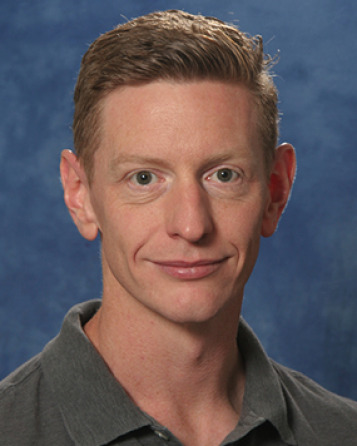
Craig Hardgrove is an Associate Professor at Arizona State University's School of Earth and Space Exploration. He leads the LunaH-Map mission, ASU's first planetary science mission, and is a key member of the Mars Science Laboratory Curiosity rover's Dynamic Albedo of Neutrons (DAN) team. His research focuses on planetary geochemistry, particularly volatile abundances in planetary surfaces, and integrates infrared remote sensing to study sedimentary processes. He also pioneers CubeSat technology and planetary instrumentation development, including the SINGR spectrometer. Hardgrove has contributed to multiple Mars missions (MER, MSL, Mars-2020) and collaborates on lunar exploration projects like Lunar-VISE.
Before joining ASU in 2015, he worked at Malin Space Science Systems as an assistant staff scientist. His expertise spans planetary geoscience and instrument engineering, with a focus on neutron and gamma-ray spectroscopy for in-situ planetary analysis. Recent work includes optimizing neutron detection systems for lunar and Mars environments, analyzing Gale Crater's clay-sulfate transition zones, and advancing CubeSat-based exploration strategies.
Hardgrove's contributions bridge mission leadership and scientific discovery, emphasizing robotic and human exploration tools for resource characterization in space. His work on the Mars Science Laboratory's DAN instrument has provided critical insights into subsurface water and mineral distributions. He actively explores applications of terrestrial hydrology methods to planetary neutron sensing, enhancing analog field experiments for mission validation.
His current projects include the Lunar-VISE mission to investigate silicic volcanism on the Moon and the SINGR instrument development for future interplanetary CubeSat missions. These efforts highlight his dual focus on advancing small spacecraft capabilities and deepening our understanding of planetary surface processes.