معرفی
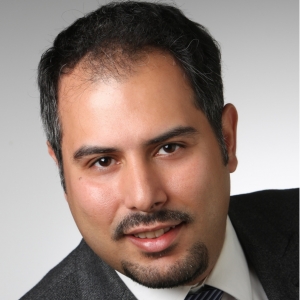
Chrystopher Nehaniv is a full-time Professor in the Department of Biomedical Engineering at the University of Waterloo, actively contributing to research groups including Intelligent and Autonomous Systems, Physical Systems and Mechatronics, and Human Factors and Interfaces. His work bridges mathematical theory with practical applications in robotics and complex systems, reflecting a strong interdisciplinary approach across engineering and cognitive sciences.
His research spans algebraic structures in transformation semigroups, complex adaptive systems, and human-robot interaction. Key interests include cellular automata, autopoiesis, dynamical systems theory, and EEG microstate analysis, with significant theoretical contributions to semigroup complexity and practical implementations in domestic service robotics. Recent work emphasizes biologically inspired imitation learning, continual adaptation in human-robot teams, and mathematical modeling of social dynamics in games and neural systems.
Analysis of his 15 most recent publications (2024-2025) reveals three dominant trajectories: (1) foundational algebraic work on transformation semigroups and finite groups applied to sandpile models, traffic systems, and game theory; (2) robotics innovations in social referencing, mental imagery, and continual learning for domestic service robots; and (3) neuroscience applications through EEG microstate syntax analysis and neural dynamics modeling. These threads consistently integrate rigorous mathematical frameworks with real-world complex systems challenges.
No scientific awards or fellowships were mentioned in the provided materials.
While specific student advisees and grant details were absent from the source text, his extensive publication record in human-robot interaction and complex systems suggests active supervision in interdisciplinary robotics projects. The absence of explicit grant mentions contrasts with his high-output research profile across multiple domains.
Nehaniv operates within Waterloo's Intelligent and Autonomous Systems research ecosystem, collaborating across physical robotics (mechatronics, human factors) and theoretical frameworks (BIOMICS interaction computing). His work with the iCub robot platform and domestic service robot implementations indicates hands-on laboratory engagement, particularly in social interaction validation and object disambiguation systems.