معرفی
Christopher W. Harbison is an Associate Professor in the Department of Biology at Siena University, where he has served since 2008 after promotions from Assistant to Associate Professor. His academic journey includes prior roles at Carleton College and the University of Utah, grounded in field research experience across national parks and ecological sites.
His educational credentials include:
- Ph.D. in Biology, University of Utah
- B.A. in Biology, Carleton College
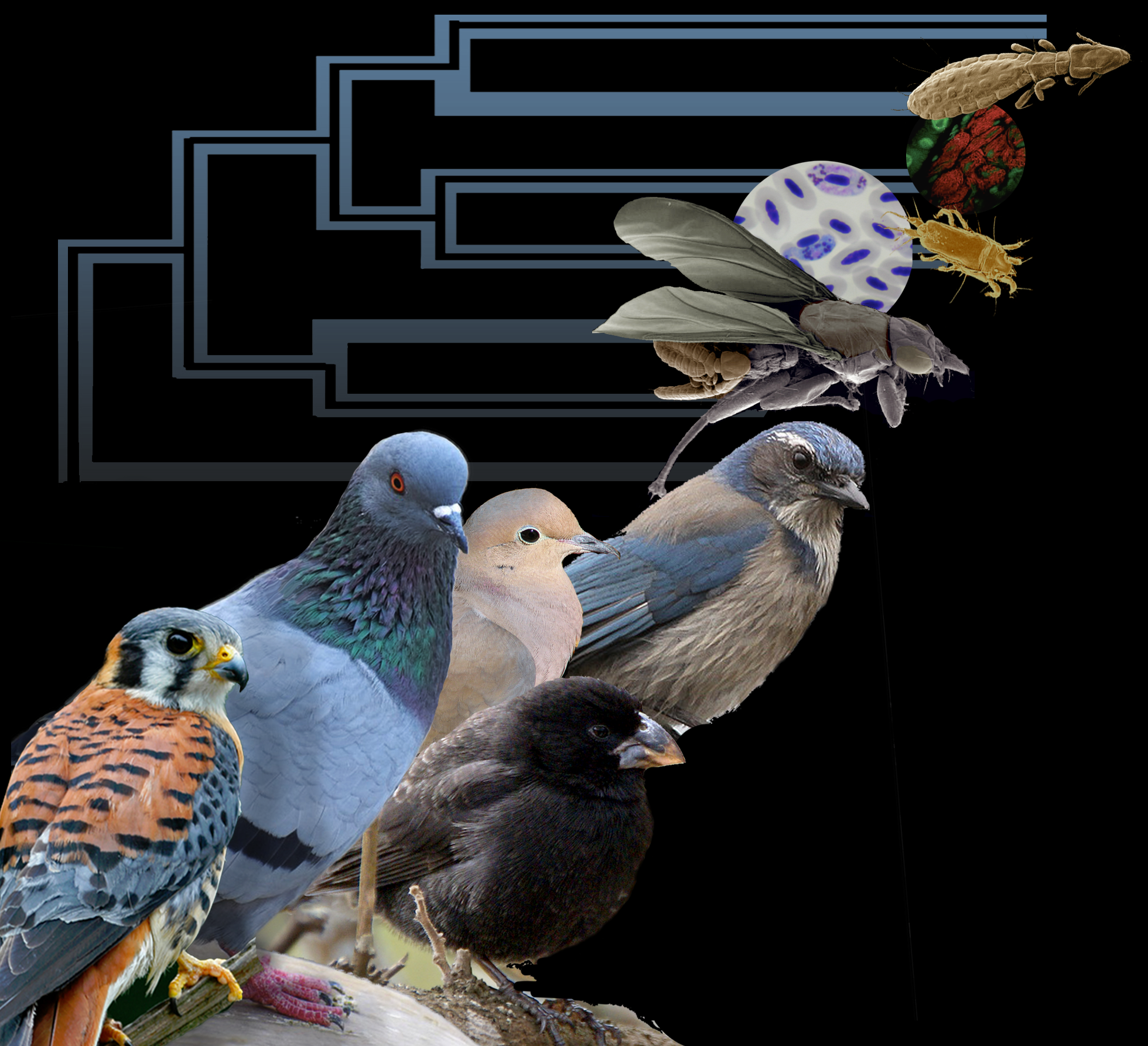
Dr. Harbison's research centers on evolutionary ecology and parasitology, specifically investigating bird-parasite coevolutionary dynamics. Using integrated field and laboratory approaches, he examines how ecological interactions drive adaptations in host-parasite systems like feather-feeding lice on birds. His work spans ornithology, behavioral ecology, and coevolutionary theory, revealing mechanisms from thermal orientation in parasites to geographic variation in parasite communities. This research bridges fundamental biological principles with real-world ecological applications.
His publication record demonstrates consistent innovation in host-parasite studies, evolving from foundational work on louse transmission (2006-2009) toward complex community ecology and coevolutionary modeling (2010-2020). Key trends include increasing integration of behavioral observations with molecular techniques and expansion from single-host systems to multi-parasite community dynamics.
His scientific recognition includes:
- Siena Summer Scholars Fellowship (2014)
- COTFD Faculty Pedagogy Grant (2013)
- Siena Summer Scholars Fellowship (2012)
Dr. Harbison actively mentors undergraduates through research-integrated teaching, particularly in Ornithology and Evolution courses. His grants support both scholarly research (Summer Scholars) and pedagogical innovation (COTFD Grant), reflecting dual commitments to discovery and education. He emphasizes developing student research skills through hands-on experimentation in small-class settings.
His research program utilizes field sites and laboratory facilities for behavioral experiments on avian parasites, frequently involving student collaborators in data collection and analysis of host-parasite adaptation mechanisms.