معرفی
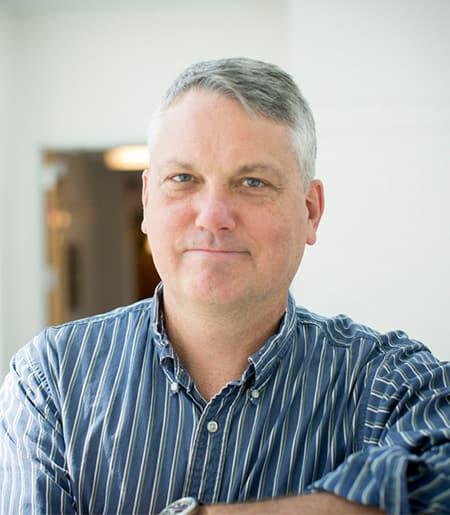
Christopher Myers is an Adjunct Professor in the Department of Physics at Cornell University and a Senior Research Associate at the Cornell Center for Advanced Computing. He is also a member of the graduate faculty in Physics, Computational Biology, Applied Mathematics, and Computational Science and Engineering. His research spans multiple disciplines, connecting physics, biology, and computational science.
Myers earned his B.A. in History from Yale University in 1984 and his Ph.D. in Physics from Cornell University in 1991. His academic journey includes postdoctoral positions at UC Santa Barbara and the Cornell Theory Center, followed by various research roles at Cornell institutions including the Institute of Biotechnology and arXiv.org (where he served as Scientific Director from 2014-2016).
Myers' research focuses on complex systems at the intersection of physics, biology, and computational science. His primary areas include infectious disease dynamics and host-pathogen interactions, theoretical and computational systems biology, biological information processing, dynamics and cascades on networks, and the structure and dynamics of intracellular networks. He has made significant contributions to understanding how complex systems behave across multiple scales, from molecular networks to ecological communities. His work often employs computational approaches to model and analyze biological phenomena.
His recent publications (2020-2024) show a strong trend toward interdisciplinary research connecting computational methods with biological and ecological systems. There's a clear focus on network approaches to understanding disease transmission, particularly in plant-pollinator communities, as well as developing new computational methods for analyzing complex systems. His work increasingly integrates machine learning techniques with traditional modeling approaches to address complex biological questions.
Myers has been actively involved in teaching and mentoring, having served as an Adjunct Professor since 2010 and teaching courses such as 'Computational Methods for Complex Systems' (Physics 7682). He has also developed and taught workshops on Python for high performance computing, data science, and AI with deep learning through Cornell's various educational programs including CVW and eCornell.
His research has been conducted through multiple labs and teams, including the Cornell Center for Advanced Computing (current), the Institute of Biotechnology (2007-2017), and the Cornell Theory Center (1993-1997, 1998-2007). These teams have focused on computational approaches to biological problems, with particular emphasis on systems biology, infectious disease modeling, and software development for scientific computing.